Does Cheese Cause Nightmares? The Old Warning Gets a Surprising Update
It is late, the dinner plates are cleared, and someone produces a cheese board. There is a wedge of Stilton, veined and pungent, a slab of aged Cheddar, and a soft, yielding Brie. You take a piece — or three — and head to bed. Hours later you wake up, heart thudding, from a dream in which your childhood home had extra rooms and the furniture was quietly judging you. Was it the cheese?
For centuries, the answer from folklore was a confident yes. Cheese, people said, sat heavily in the stomach, fermented through the night, and sent strange vapours upward to trouble the brain. The warning was so well established that Charles Dickens put it in the mouth of Ebenezer Scrooge, who, confronted by the ghost of Jacob Marley, insists the apparition is merely “an undigested bit of beef, a blot of mustard, a crumb of cheese, a fragment of underdone potato.” The joke only worked because the audience already believed that cheese could haunt a night’s sleep.
Modern science has now had two serious looks at the claim, two decades apart, and the two studies point in the same surprising direction: the old saying is wrong for most people, but it is not entirely baseless either. The truth is a story about digestion, timing, and a gut that talks to the brain all night long.

A starry night sky — the stage on which cheese has been blamed for centuries of bad dreams.
Where the warning comes from
The idea that cheese disturbs sleep is older than modern nutrition by centuries. In pre-scientific medicine, digestion was understood through the theory of humours, and rich, fatty foods eaten late were thought to produce vapours that rose to the head during sleep. Cheese, being dense, fatty, and often strongly flavoured, was a natural suspect. The belief survived into the Victorian era, when it was common wisdom that a supper of cheese and ale would guarantee a restless night, and it survived into the twentieth century as a piece of grandmotherly advice repeated without much examination.
That longevity is part of what makes the claim interesting. Unlike many food myths, which collapse the moment someone tests them, the cheese-and-nightmares story was actually tested — twice, by very different kinds of researchers, with results that keep the debate alive.
The cheese board experiment of 2005
The first test came, improbably, from the cheese industry itself. In 2005, the British Cheese Board — a trade body with an obvious interest in selling more cheese — recruited 200 volunteers and asked them to eat a small piece of cheese, about 20 grams or two-thirds of an ounce, half an hour before bed, every night for a week. The volunteers kept dream diaries, recording how they slept and what, if anything, they dreamed about.
The results, announced with considerable fanfare, were the opposite of the folklore. About three-quarters of the participants said they slept well every night, and most could remember their dreams. Far from causing nightmares, cheese appeared to produce pleasant, even entertaining dreams — and, oddly, the type of dream seemed to vary with the type of cheese. People who ate blue Stilton reported vivid, bizarre dreams, including talking animals and lifts that moved sideways. Cheddar eaters dreamed about celebrities. Red Leicester eaters dreamed nostalgically about their schooldays. More than half of those who ate Cheshire reported no dreams at all.
The board’s secretary, Nigel White, presented the findings as a debunking. In an interview with NPR, he explained the board’s reasoning: cheese contains tryptophan, an amino acid known to help normalise sleep and reduce stress, and that seemed to explain the good sleep. The study was reported around the world, and for a decade or more it was the standard citation whenever anyone asked whether cheese causes nightmares.
There were, however, serious problems with treating it as a scientific verdict. The study was never published in a peer-reviewed journal. There was no control group — nobody ate a non-cheese snack for comparison — and the participants knew exactly what they were eating and why. Dream diaries are self-reported and highly suggestible: tell someone that Stilton gives you strange dreams, and strange dreams are what they are primed to notice and record. And the sponsor had a commercial interest in a cheerful result. As evidence, the 2005 study is suggestive at best. It showed that a small piece of cheese before bed did not obviously ruin anyone’s week of sleep, but it could not show that cheese was harmless, let alone that different cheeses steer dreams in different directions.
Still, the study planted an important seed: the possibility that cheese might affect dreams not through some mysterious property of cheese itself, but through the ordinary mechanics of sleep and digestion.

A fresh evening meal — what you eat, and when, shapes the night that follows.
The study that changed the picture
The second look came twenty years later, and it was a very different kind of study. In 2025, researchers led by Tore Nielsen of the Université de Montréal published a peer-reviewed paper in the journal Frontiers in Psychology, based on a survey of 1,082 students at MacEwan University in Canada. The students were asked detailed questions about their sleep, their dreams and nightmares, their eating habits, and whether they believed particular foods affected their dreams. They were also asked about their physical and mental health, including food sensitivities.
The headline finding was striking. Nightmare severity was robustly associated with lactose intolerance and other food allergies. Nielsen himself summed it up plainly: “Nightmare severity is robustly associated with lactose intolerance and other food allergies.” The researchers went further than a simple correlation. Using a statistical technique called mediation analysis, they tested whether the link could be explained by stomach trouble — and it could. People with lactose intolerance were more likely to suffer bloating, gas, or stomach pain at night, and that discomfort was in turn associated with more frequent and more intense nightmares.
The survey also asked participants which foods they blamed for their bad dreams. Dairy products — milk, cheese, and yoghurt — accounted for nearly 22 percent of the foods named. Desserts and sweets took the top spot, at almost 30 percent. Spicy foods, meats, and cereals also appeared on the list. At the other end of the spectrum, fruits, vegetables, and calming herbal teas were associated with better sleep and more pleasant dreams.
Crucially, the researchers did not find that simply eating dairy caused nightmares in everyone. The effect was concentrated among people with lactose intolerance or other food sensitivities. For everyone else, cheese before bed showed no clear link to bad dreams. And there was a second, independent pattern: people who ate late at night — snacking after dinner or waking up to eat — tended to have poorer sleep and more disturbing dreams regardless of what they ate.
This reframing matters because it explains why the folklore survived for so long. A meaningful fraction of adults — roughly two-thirds of the world’s population has some degree of lactose malabsorption, though rates vary greatly by ancestry — will feel real digestive discomfort after eating dairy, especially in the evening. Those people really do sleep worse after cheese, and they really do remember worse dreams. They told their families, their families believed them, and the story hardened into a general rule that was never actually general.
Why a troubled stomach makes troubled dreams
The mechanism the 2025 study points to is not mystical at all. It runs through the ordinary architecture of sleep.
Most vivid dreaming happens during REM sleep, the stage in which the brain is highly active and the body is effectively paralysed. Dreams are produced all night, but they are usually forgotten unless the sleeper wakes up during or just after a REM period. Anything that fragments sleep — pain, bloating, cramps, a need to get up — increases the chance of waking during REM and therefore of remembering a dream. Discomfort does not necessarily create stranger dreams; it makes the dreams you were already having more likely to be caught and remembered, and pain and distress during the night tend to colour their emotional tone toward the unpleasant.
Cheese is a plausible trigger for this chain for two separate reasons. First, it is rich in fat and protein, both of which take longer to digest than most foods, so a large portion eaten close to bedtime can leave the digestive system still hard at work when sleep begins. Second, for people with lactose intolerance, the undigested lactose is fermented by gut bacteria, producing gas and discomfort precisely in the hours when the body is trying to settle. The gut and the brain communicate constantly through the gut-brain axis, a two-way signalling system involving nerves, hormones, and immune messengers, so a distressed gut is well placed to disturb a sleeping brain.
There is also an irony at the heart of the story. Cheese contains tryptophan, the amino acid the British Cheese Board cited in 2005, which the body uses to make serotonin and then melatonin, the hormone that regulates the sleep-wake cycle. That is the same biochemical pathway behind the familiar claim that turkey makes you sleepy — a claim we examined in our fact-check of the turkey tryptophan sleepiness myth. The amounts of tryptophan in a normal serving of cheese are modest, and the effect of any single food on sleep through this route is small, but the direction of the effect is toward better sleep, not worse. Cheese is, biochemically, a mildly sleep-friendly food that can nevertheless ruin the night of someone whose gut cannot handle it.
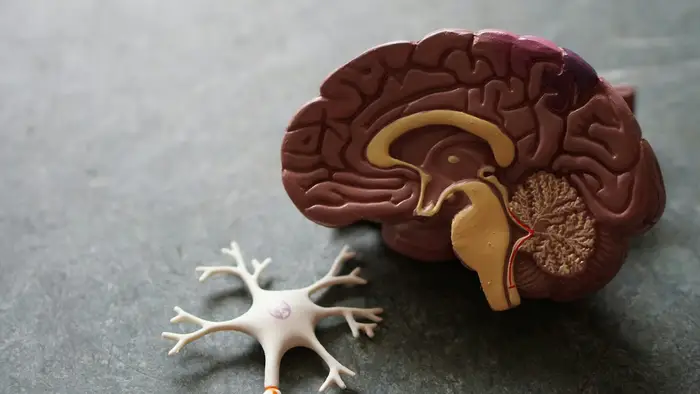
The dreaming brain — fragmented sleep makes vivid dreams more likely to be remembered.
The Verdict
Misleading. The claim that cheese causes nightmares, stated as a general rule, is misleading. There is no good evidence that cheese contains anything that triggers nightmares in the average person, and the best-known study on the subject — the British Cheese Board’s 2005 experiment — actually found that most participants slept well after eating cheese. But the claim is not pure invention either. A peer-reviewed 2025 study of 1,082 students found that nightmare severity is robustly associated with lactose intolerance and other food allergies, with the link largely explained by overnight digestive symptoms. For people whose guts object to dairy, cheese late in the day really can be part of the story of a bad night.
That distinction — between cheese itself and what cheese does inside a particular body — is the whole answer. The folklore took a real experience, belonging to a minority of eaters, and stretched it into a universal law. Science has now shrunk it back to its proper size.
What actually drives a bad night
If cheese is mostly innocent, what should you blame instead? The research points to a handful of much stronger suspects. Eating a large meal close to bedtime, whatever it contains, is consistently linked to poorer sleep and more disturbing dreams — a pattern closely related to the one we examined in our fact-check of whether eating late at night causes weight gain. Alcohol, which fragments REM sleep and is a well-established nightmare trigger, is another. So are stress and anxiety, irregular sleep schedules, sleep deprivation itself (which produces a REM rebound of unusually intense dreaming), and certain medications, including some antidepressants and blood pressure drugs.
Timing, in other words, matters more than the cheese. A small piece of cheese at 7 p.m. as part of dinner is a very different proposition from a large cheese board at 11 p.m. followed immediately by bed. Most sleep experts recommend finishing substantial eating two to three hours before sleep, giving digestion time to wind down before the brain takes over.
There is one more nuance worth knowing. Aged, hard cheeses such as Parmesan and mature Cheddar contain very little lactose, because most of it is drained away with the whey and broken down during ageing. Soft, fresh cheeses and milk contain much more. So even within the world of cheese, a lactose-sensitive person may tolerate some varieties far better than others — another reason a blanket warning about “cheese” was always too crude to be true.

For people with lactose intolerance, dairy at night can mean real digestive discomfort — and worse dreams.
Why the myth stuck around
If the evidence for cheese causing nightmares is so thin, why has the warning survived for centuries when countless other food superstitions have faded? Part of the answer is that the myth is unusually good at confirming itself.
Human memory is selective about dreams. A person who eats cheese late, sleeps badly, and wakes from a nightmare remembers the cheese and the nightmare together, and the pairing feels like proof. The dozens of nights when the same person ate cheese and slept perfectly are forgotten, because nothing happened worth remembering. Psychologists call this pattern illusory correlation: two memorable things occur together once, and the mind files them as a rule. Nightmares are vivid and distressing, which makes them especially memorable, and cheese is a distinctive, flavourful food, which makes it an easy thing to blame. The combination is almost designed to lodge in memory.
Culture did the rest. Once Dickens had used the cheese excuse as a joke, the idea had a permanent home in the English-speaking imagination, repeated in books, films, and family kitchens until it felt like common sense. Every generation of children told not to eat cheese before bed grew up to repeat the warning to their own children, and each repetition made the claim feel more established, regardless of what any study said. The 2005 cheese board study, for all its flaws, shows how even an attempt to debunk the myth ended up reinforcing the association in public discussion: the headlines were about cheese and dreams, not about cheese and ordinary sleep.
There is also a subtler reason the myth endures. It contains a grain of truth, and claims with a grain of truth are far harder to kill than pure inventions. Because lactose-intolerant people genuinely do sleep worse after dairy, every family seems to contain someone who can honestly say, “Cheese gives me nightmares.” Their testimony is sincere and their experience is real. It is only the generalisation — from their gut to everyone’s dreams — that is wrong. Myths built on real experiences, misapplied, are the most durable myths of all.
So should you eat cheese before bed?
For most people, the answer is reassuringly dull: a modest amount of cheese in the evening is unlikely to give you nightmares. If you enjoy a cheese course, there is no scientific reason to give it up out of fear of your dreams, any more than there is reason to fear the full moon’s supposed effect on behaviour. Keep portions modest, finish eating a couple of hours before bed, and pay attention to how you actually feel rather than to centuries of folklore.
If you are lactose intolerant, the advice flips. Your experience is real, and the 2025 study suggests it has a physical cause worth respecting. Try skipping dairy in the evening, or switching to hard, aged cheeses and lactose-free alternatives, and see whether your dreams calm down. If nightmares are frequent, severe, or regularly wrecking your sleep, that is worth raising with a doctor — not because of the cheese, but because persistent nightmares can signal stress, sleep disorders, or medication effects that deserve attention.
The cheese, in the end, was never the villain of this story. It was a witness, standing in the wrong place at the wrong time: rich, late, and indigestible for a large minority of the people who ate it. Dickens got the joke right, even if he got the science wrong. Scrooge’s cheese did not conjure the ghost. But for the millions of people whose stomachs protest after dairy, the ghost of a bad night’s sleep is real enough — and now, finally, it has an explanation that does not require believing in ghosts at all.

A quiet evening — for most people, a modest piece of cheese is no threat to a good night’s sleep.