Does Turkey Really Make You Sleepy? The Tryptophan Myth Behind the Thanksgiving Food Coma
You know the scene. The plates are cleared, the pie has been reduced to a few crumbs, and someone in the family has migrated to the couch, where they are now asleep with their mouth open while a football game plays unwatched on the television. It happens every year, in millions of homes, and every year the same explanation gets delivered with total confidence: it’s the tryptophan in the turkey.
The story sounds like science, which is why it has survived for decades. Turkey contains an amino acid called tryptophan. Tryptophan is a building block for serotonin, which the body converts into melatonin, the hormone that regulates sleep. Therefore, eating turkey makes you sleepy. The logic is tidy, the chemistry is real, and the conclusion is wrong.
ProofNews dug into the nutrient data, the biochemistry, and what nutrition scientists and food chemists actually say about the Thanksgiving crash. The short version: turkey is about as sleep-inducing as a chicken sandwich, the dose on your plate is nowhere near what it would take to sedate you, and the nap is real — it is just caused by almost everything on the table except the turkey’s tryptophan.
The Claim, Exactly As People Tell It
The folk theory comes in a few flavors, but the standard version goes like this: turkey is unusually rich in tryptophan, an amino acid that the body turns into the sleep hormone melatonin. Eating a big serving of turkey floods your system with tryptophan, your melatonin rises, and you fall asleep. Variants of the claim appear in newspaper Thanksgiving explainers, in listicles of “foods that make you tired,” and in millions of family dinners, where it functions as a piece of dinner-table science that makes the person reciting it sound knowledgeable.
Strip away the chemistry and the claim is a specific, testable one: that turkey, as a food, has a meaningful sedative effect attributable to its tryptophan content. For the claim to be true, three things would have to hold. First, turkey would need to contain notably more tryptophan than comparable foods. Second, the amount on a normal plate would need to be enough to produce sleepiness. Third, the tryptophan in the meat would need to actually reach the brain in a form that changes sleep chemistry. As we will see, the evidence fails on all three counts — and the third failure is the most interesting, because it involves a molecular bottleneck that most dinner-table scientists have never heard of.
A Crash Course on Tryptophan
To be fair to the myth, its starting ingredients are genuine. Tryptophan is one of the essential amino acids, meaning the human body cannot manufacture it and must get it from food. According to the National Library of Medicine, the body uses dietary tryptophan to make melatonin, which helps regulate the sleep-wake cycle, and serotonin, which is involved in appetite, sleep, mood, and pain regulation. The biochemical pathway is real: tryptophan becomes serotonin, serotonin becomes melatonin, and melatonin makes you sleepy.
Tryptophan also has a genuine history as a sleep aid. In the 1980s, it was sold in supplement form as a remedy for insomnia, and those supplements contained doses far larger than anything in a meal — two to five times the tryptophan of a hearty Thanksgiving dinner, according to science writers who have traced the myth’s roots. That history matters, because it is almost certainly where the folk theory picked up its air of medical authority. Someone learned that tryptophan is associated with sleep, someone else learned that turkey contains tryptophan, and the two facts got bolted together into a causal story that neither fact actually supports.
The mistake is a classic one in nutrition folklore: confusing the presence of a substance with a dose that does something. Water is essential for life; that does not make a damp sponge a health food. The question was never whether turkey contains tryptophan — it does, as does nearly every protein-rich food on earth. The question is whether it contains enough, in a form that reaches the brain, to make a person sleepy. And on that question, the numbers are unkind to the turkey.
The Numbers: Turkey Is Not a Tryptophan Outlier
Here is the fact that sinks the claim. Turkey’s tryptophan content is thoroughly ordinary.
Darren Scott, a food scientist at Oklahoma State University’s food and agricultural products center, has spent years patiently debunking this one. “It’s not really the turkey that makes us sleepy,” Scott said in a university fact-check piece. “There’s really not that much more tryptophan in turkey than in other poultry.” His figure: approximately a quarter of a gram of tryptophan per 100 grams of poultry. Turkey breast comes in at roughly 0.29 grams per 100 grams in USDA FoodData Central figures — essentially identical to chicken’s 0.25 grams.
Put another way, turkey holds no special position in the tryptophan rankings. Nutrient databases built on USDA figures list lean chicken and turkey together at the top of the meat category, with about 404 milligrams per 100 grams, but beef skirt steak (374 mg), lean pork chops (369 mg), and salmon (335 mg) are right behind them. Pumpkin seeds pack 576 milligrams per 100 grams. Cheddar cheese, as University of Wisconsin science writers have noted, contains significantly more tryptophan than turkey — yet no one has ever blamed a cheese board for a food coma. As Scientific American’s deep dive on the myth put it, turkey delivers only about 509 milligrams of tryptophan per 200-calorie serving, making it “quite an average food,” and some of the other dishes on the Thanksgiving table may contain more tryptophan than the turkey does.
The pattern is damning for the folk theory. If tryptophan in turkey caused drowsiness, then chicken dinners, pork chops, salmon fillets, and cheese plates would all be famous for knocking people out. They are not. The sleepiness is specifically associated with the holiday feast — which suggests the cause is something about the feast, not the bird.
The Blood–Brain Barrier Problem
Even if turkey were a tryptophan standout — it is not — the amino acid would still face a formidable obstacle between your plate and your sleepiness: the blood–brain barrier.
Tryptophan does not drift passively into the brain. It is carried across the blood–brain barrier by a dedicated molecular transporter, and that transporter is not exclusive to tryptophan. The same carrier also ferries several other large neutral amino acids — the competing building blocks found in all that protein. That means the tryptophan from your turkey is stuck in a queue with every other amino acid from the meal, jostling for the same limited number of seats on the same molecular bus.
Scientific American’s analysis of the myth lays out the consequence plainly: for dietary tryptophan to meaningfully change brain chemistry, a person would have to ingest enormous amounts of pure tryptophan, with no competing amino acids along for the ride, and somehow get the transporters to carry it all into the brain. A turkey dinner is the opposite of that scenario. As Judith Rodriguez, a registered dietitian and chair of nutrition and dietetics at the University of North Florida, has explained, turkey contains many other amino acids that “probably blunt the impact of tryptophan.” One nutrition analysis goes further, noting that a protein-heavy meal can actually lower the relative delivery of tryptophan to the brain, because the competing amino acids win the contest at the barrier.
This is the detail that the dinner-table version of the story always omits. The pathway from mouth to brain is not a pipe; it is a contested border crossing. And the turkey, arriving with a full entourage of rival amino acids, is about the worst possible vehicle for smuggling extra tryptophan past the guards.
The Dose Problem
Then there is the sheer arithmetic of the dose. Controlled research has shown that consuming more than about one gram of pure L-tryptophan can increase sleepiness and shorten the time it takes to fall asleep. That is the benchmark: roughly a gram, taken on its own, without competition.
Now do the dinner math. A generous Thanksgiving serving of turkey — say 300 grams of meat, which is a large portion by any standard — delivers somewhere around 0.75 to 0.9 grams of tryptophan, before accounting for the absorption competition that blunts most of it. A normal serving lands well under half the studied effective dose, and it arrives mixed with the very amino acids that block its path to the brain. Brittany Grigorenko, a clinical dietitian with Cape Cod Healthcare, put it in terms anyone can grasp: “You would need to eat 20 servings of turkey to make you sleepy.”
Christopher Smith, a nursing professor at UNC Charlotte who researches cardiometabolic disease, was even more direct: “The answer is cut and dry. Eating turkey does not make you sleepy.”
So the claim fails at every level of the mechanism. Turkey is not exceptional in tryptophan content. The dose on a plate is far below what studies show can cause sleepiness. And even that modest dose is mostly blocked from reaching the brain by competing amino acids. If this were a court case, the prosecution’s evidence would have been thrown out three times over.
So Why the Nap? Meet the Real Culprits
None of this means the Thanksgiving nap is imaginary. People really do get drowsy after the holiday meal — reliably, predictably, and at roughly the same hour every year. The error is not in observing the drowsiness. The error is in the suspect lineup. Researchers point to a pileup of far more plausible culprits, and the turkey is not among them.
The sheer volume of food. Holiday dinners are enormous. Some estimates put a single Thanksgiving sitting at roughly 3,000 calories or more — a full day’s energy intake compressed into one meal. Digesting that much food is expensive work, and the body responds by shifting into its parasympathetic “rest and digest” mode: gut hormones such as cholecystokinin are released, vagal nerve activity rises, and alertness falls. Studies of post-meal drowsiness consistently find that larger portions produce more sleepiness, regardless of what the food is.
The carbohydrates. If there is a single chief suspect, it is the mountain of starch on the plate: stuffing, mashed potatoes, candied yams, dinner rolls, cranberry sauce, and pie. These foods are high on the glycemic index, meaning they break down quickly and spike blood sugar, triggering a large release of insulin — sometimes an overcompensating one — that drives blood sugar back down just as fast. Smith, the UNC Charlotte researcher, named the mass consumption of carbohydrates as the main cause of post-Thanksgiving drowsiness. Don Young, a chemistry professor at the College of William and Mary, summarized the expert consensus in one sentence: “It’s not that you’re eating a lot of tryptophan. It’s more that you’re eating a lot of food, and specifically carbohydrates.” Controlled research backs him up: a 1997 study by Wells and colleagues found that high-carbohydrate meals produced measurably more afternoon sleepiness than high-protein meals of equal calories.
The fat. Holiday cooking is rich cooking — butter in the mashed potatoes, gravy on everything, pie crust made with shortening. Fat slows gastric emptying, which means the digestive marathon lasts longer, and the body spends more energy running it. Dietitians list fatty foods among the standard contributors to post-meal drowsiness.
The alcohol. Wine with dinner, a beer during the game, a cocktail while cooking — alcohol is a sedative and a central nervous system depressant, and it also stimulates appetite, encouraging even larger portions. Even modest afternoon drinking measurably impairs alertness and driving performance.
The clock. Thanksgiving dinner typically lands in the mid-afternoon, squarely inside the body’s natural circadian dip in alertness — the same window that produces the everyday post-lunch slump. The nap would be partly expected even if the meal were a salad.
The holiday itself. Cooking for a crowd, traveling, hosting relatives, and short nights of sleep all leave people running on a deficit before the first plate is served. Stress and prior sleep loss are well-documented amplifiers of post-meal sleepiness, and Thanksgiving supplies both in abundance.
The Ironic Twist: The Carbs Move Tryptophan Better Than the Turkey Does
Here is the detail that makes the myth almost poetic in its wrongness. There is a well-established mechanism by which a meal can increase tryptophan delivery to the brain — and the turkey is not the part of the meal that triggers it. The carbohydrates are.
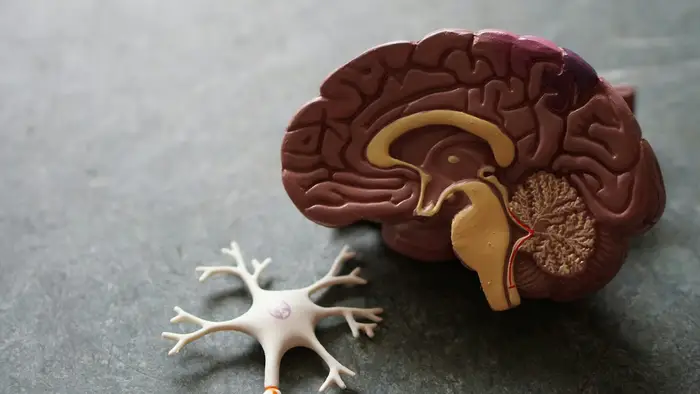
The mechanism was characterized in the 1970s by researchers Fernstrom and Wurtman and confirmed in later meal studies: when you eat a carbohydrate-rich meal, the resulting insulin surge clears competing amino acids out of the bloodstream and into tissues, which raises the ratio of tryptophan to its rivals in the blood. With less competition at the blood–brain barrier’s transporter, more tryptophan gets through, and brain serotonin synthesis rises. Wells’ 1997 meal-composition study found exactly this pattern behind the extra sleepiness of high-carb meals.
Read that again and savor the irony. The one legitimate way a Thanksgiving plate nudges the tryptophan-to-melatonin pathway is through the sides — the mashed potatoes, the stuffing, the rolls — acting on whatever tryptophan happens to be circulating. The turkey’s own tryptophan is largely irrelevant to the effect; the same carb-driven nudge would happen with chicken, beef, or a cheese-laden casserole. The folk theory identified the right amino acid and the right hormone, then credited the wrong food.
In the interest of fairness, the debunkers deserve one correction of their own. Some anti-myth explainers insist the whole story must play out in the brain, with tryptophan crossing the barrier and converting to melatonin in the pineal gland. Scientific American’s analysis notes that this is an oversimplification: the enzymes needed to convert tryptophan to melatonin are also active outside the brain — in the retina, in the Harderian gland behind the eye, and in the intestine. The debunking camp gets the verdict right but sometimes trims the biology to fit the slogan. Good science communication should not replace one tidy story with another; it should replace it with the messier, more accurate one. The accurate one is this: turkey’s tryptophan is a non-factor, the feast’s carbohydrates are the main chemical driver, and the nap is the sum of a very large meal eaten at a drowsy hour of the day.
Why the Myth Refuses to Die
If the evidence is this one-sided, why does the claim survive every November? A few forces keep it alive.
First, it is plausible. The best myths are built from true parts, and every part of this one is true in isolation: tryptophan exists, turkey contains it, tryptophan leads to melatonin, melatonin causes sleepiness. Assembling true facts into a false conclusion is the oldest trick in misinformation, and it works because checking the assembly requires biochemistry most people never learned.
Second, it has a pedigree. The 1980s era of tryptophan sleep-aid supplements gave the amino acid a genuine medical reputation as a sedative — at doses many times what any meal provides. The folk theory inherited that reputation without inheriting the dosage.
Third, the correlation is real and visible. Everyone eats turkey; everyone naps. The human brain is a pattern-matching machine, and “we ate turkey, then we slept” is a pattern it cannot resist — even though “we ate an enormous carb-heavy meal with alcohol at 4 p.m. after a stressful week, then we slept” is the actual pattern.
And fourth, it is useful. Blaming the turkey is funny, it is harmless, and it gives the family biochemist a moment in the spotlight. Nobody’s health is harmed by the myth, which is precisely why no one has bothered to kill it with the force it would take. It survives on affection.
The Verdict
False. Turkey does not make you sleepy — not in any meaningful sense, and certainly not because of its tryptophan.
The evidence is consistent across nutrient databases, biochemistry, and controlled research. Turkey contains no more tryptophan than chicken, beef, pork, salmon, or — the detail that should end the argument — cheddar cheese, none of which are famous for causing naps. A normal serving delivers far less tryptophan than the doses shown to affect sleepiness, and the amino acids traveling with it block most of what little there is from reaching the brain. What researchers actually blame for the Thanksgiving crash is the rest of the occasion: a meal of several thousand calories, a landslide of high-glycemic carbohydrates, rich fatty cooking, alcohol, a mid-afternoon circadian dip, and a week of holiday stress and short sleep.
The nap is real. The suspect was wrong. Enjoy the turkey, and if you need someone to blame for the couch, blame the pie.


ProofNews verdicts: True — the claim is accurate as stated. Mostly True — accurate with minor caveats. Misleading — contains truth but framed to deceive. False — contradicted by the evidence. Unproven — not enough evidence either way.