Can You Swallow Your Tongue During a Seizure? The First-Aid Myth That Can Do Real Harm
Someone near you stiffens, falls, and begins to jerk uncontrollably on the floor. It is frightening to watch, and the urge to do something — anything — is immediate and powerful. For generations, the something that well-meaning bystanders have reached for is an object to wedge between the person’s teeth: a spoon, a wallet, a belt, a finger. The reasoning feels obvious. The person might swallow their tongue, and if you do not stop it, they could choke.
That reasoning is wrong in every part that matters. A person cannot swallow their tongue during a seizure. The tongue is physically anchored in place, and no seizure can tear it loose and send it down the throat. Worse, the attempt to prevent this impossible event is itself one of the most dangerous things a bystander can do. It can break teeth, cause choking, and seriously injure the helper’s own hand. Every major epilepsy and first-aid authority says the same thing: never put anything in the mouth of a person having a seizure.
This is not a close call or a matter of expert disagreement. It is one of the most thoroughly settled questions in first aid, backed by anatomy, by a peer-reviewed historical review, and by decades of guidelines. And yet the myth survives, repeated in films, in television dramas, and in panicked advice passed from one generation to the next. Understanding why it is false — and what to do instead — is the kind of knowledge that could one day matter in the most practical way possible.

Illustration: medical authorities are unanimous — nothing should ever go into the mouth of a person having a seizure.
The claim, in plain language
The claim has two linked parts. The first is that during a seizure, a person can swallow their own tongue — that the tongue can somehow roll back, detach, or be drawn into the throat and block the airway. The second is the prescription that follows from it: that a bystander should put something in the person’s mouth to hold the tongue down or keep the teeth apart.
Both parts are false. The first is anatomically impossible. The second is actively harmful. It is worth separating them, because even people who doubt the first part sometimes hedge on the second, reasoning that a spoon “can’t hurt, just in case.” It can. That hedge is exactly how injuries happen.
Seizures are not rare events that happen only to strangers. About one person in ten will have a seizure at some point in their life, according to figures cited by the Epilepsy Foundation of Michigan, and around 3.4 million people in the United States live with active epilepsy, according to the U.S. Centers for Disease Control and Prevention. That means most of us are reasonably likely, sooner or later, to be standing near someone who is having one. What we believe about it in advance will decide what we do in the moment, when there is no time to look anything up.
What the tongue actually is
The reason the claim fails starts with simple anatomy. The tongue is not a loose object sitting in the mouth, like a stone in a bowl. It is a powerful muscle, and it is anchored to the floor of the mouth by a band of tissue called the lingual frenulum — the small fold you can feel under your own tongue if you lift it. That anchor, together with the muscles of the mouth and throat, holds the tongue in place through every state the body passes through, including seizures, sleep, and unconsciousness.
During a seizure, muscle control is disrupted, not abolished in a way that would free the tongue. The tongue may move, and the jaw may clamp, but the tongue cannot travel backward into the throat, let alone be “swallowed.” As Healthline puts it in its explainer on the subject, during a seizure, tissues in the mouth hold the tongue in place, and there is no such thing as swallowing your tongue.
A peer-reviewed paper published in the journal Seizure in 2020, by Rossi and colleagues, reviewed the medical and popular literature on this exact question and reached the same conclusion in the plainest possible terms: one cannot swallow their tongue during a seizure, and foreign objects should not be placed into a seizing person’s mouth. The authors found ample modern literature confirming both the anatomical impossibility and the potential harm of putting objects in a patient’s mouth. This is not a folk belief being weighed against another folk belief. It is anatomy against imagination.
If you want to test the anchor yourself, try this harmless experiment: open your mouth and try to push your tongue backward far enough to block your own throat. You cannot do it, because the frenulum and the muscles of the tongue will not allow it. A seizure does not change that geometry. It changes the brain’s electrical activity, not the attachments of the mouth.
Where the myth came from
The myth is old, and its age is part of why it feels authoritative. The 2020 review traced the first English-language allusions to placing objects in a seizing patient’s mouth to the mid-19th century, and the first allusions to swallowing one’s tongue during a seizure to the late 19th century. In other words, this idea was already circulating before modern neurology existed, before epilepsy was understood as a brain disorder, and before anyone had recorded the electrical activity of a seizure.
Nineteenth-century medicine had other explanations for seizures, many of them wrong, and first aid grew out of those explanations. If you believed a seizure was a kind of strangling from within, or that the body was being choked by its own parts, then propping the mouth open seemed logical. The advice was passed down through first-aid manuals, household guides, and eventually films and television, long after the underlying theory had been abandoned. By the mid-20th century, the review found, some voices were already recommending against the practice. But popular culture kept portraying it, with incorrect seizure first aid appearing in films through at least 2013.
That is how a bad idea survives its own refutation: it looks dramatic, it feels decisive, and it gives a frightened bystander something to do. A character on screen forcing a wallet between a seizing person’s teeth looks like a hero. In real life, the same act can shatter teeth and send fragments into the airway. The camera does not show the dental surgery that follows.
Old medical advice has a long half-life in general. The same pattern shows up in other household rules that modern evidence has overturned, from the idea that you should feed a cold and starve a fever to the scolding that going outside with wet hair will give you a cold. The tongue-swallowing myth belongs in the same category: advice that survived because it was repeated, not because it was right.
What actually happens during a seizure
To understand why the myth is wrong, it helps to know what a tonic-clonic seizure — the type most people picture when they hear the word “seizure” — actually involves. It typically begins with the body stiffening, a phase called the tonic phase, followed by rhythmic jerking, the clonic phase. Consciousness is lost. The jaw may clamp shut. Breathing may look strange or seem to pause, because the chest muscles tighten during the tonic phase. The person may bite their tongue or the inside of their cheek, and may lose bladder control. The whole event usually lasts one to three minutes and then stops on its own.
None of that involves the tongue leaving its place. What can happen, and what the myth may be a distorted memory of, is tongue biting. When the jaw clamps with the force of a seizure, the tongue or cheek can get caught between the teeth. That can be painful and can draw blood, and it can look alarming. But a bitten tongue is not a swallowed tongue, and it rarely causes serious injury on its own. It certainly does not justify forcing an object into the mouth, which makes the biting problem worse, not better: now the teeth are clamping on something hard, and the object itself can break.
There is another real phenomenon that gets tangled up in the myth. Breathing during the tonic phase can look as though it has stopped, because the chest muscles are rigid. A frightened bystander may interpret that as choking, and conclude that something must be blocking the airway. In fact, as the tonic phase ends, the muscles relax and breathing resumes on its own. Rescue breathing is generally not needed during these seizure-related changes in breathing, according to the Epilepsy Foundation’s first-aid guidance. The apparent pause is part of the seizure, not evidence of a swallowed tongue.

Illustration: most seizures are brief and self-limited — the bystander’s job is to protect, not to intervene in the mouth.
Why putting something in the mouth causes harm
The harm is not theoretical. The Epilepsy Foundation warns that jaw and face muscles may tighten during a seizure, causing the person to bite down, and that if something is in the mouth at that moment, the person may break and swallow the object or break their teeth. MedLink’s neurology first-aid guidance notes the same danger in even blunter terms: the human jaw is very powerful, and people have bitten through spoons, sticks, and other objects during seizures.
Think about what that means in practice. A wooden spoon splinters. A plastic pen cracks. A wallet’s contents scatter. Any fragment becomes a choking hazard in a mouth that cannot protect its own airway, because the person is unconscious and cannot cough or spit effectively. A broken tooth can be aspirated into the lungs. The object meant to prevent choking becomes the thing that causes it.
The helper is at risk too. A finger placed between clenched teeth during a seizure can be bitten badly enough to need surgery. This is not a rare freak outcome; emergency departments see it. The hand you injure trying to help is also the hand you need to make a phone call, to time the seizure, and to roll the person into the recovery position afterward.
There is also a subtler harm. Wrestling with a seizing person’s jaw, trying to force the mouth open, means restraining them. Restraint during a seizure can cause fractures and dislocations, because the muscles are contracting with enormous force against whatever holds them. The Epilepsy Foundation is explicit: do not restrain the person, and do not try to stop their movements. Holding a seizing person down does not shorten the seizure. It only adds injury to an event that would otherwise have ended on its own.
None of this is a reason to blame anyone who has done it in the past. The advice was once widespread, and the instinct behind it — protect the airway — is a good instinct aimed at the wrong target. The point is that the target is now known, and the guidance has been unambiguous for decades.
The one grain of truth
Almost every durable myth contains a grain of truth, and this one is no exception. It is worth naming it, because ignoring it would leave a gap that the myth can creep back into.
When a person is unconscious — for any reason, including after a seizure — the muscles that normally hold the tongue forward relax. The tongue can then fall backward and partially block the airway. First-aid textbooks describe this as the most common cause of airway obstruction in an unconscious patient. This is real, and it is why the recovery position exists.
But notice what this is and is not. The tongue falling back in an unconscious person is not the tongue being swallowed. It is the tongue relaxing in place, and the remedy is not an object in the mouth. The remedy is position: rolling the person onto their side, with the mouth pointing toward the ground, so that gravity pulls the tongue forward and lets saliva and any vomit drain out instead of pooling in the airway. The Cleveland Clinic’s guidance on the recovery position describes exactly this mechanism — the face angled downward keeps the tongue from rolling back and blocking the airway.
This distinction matters because it explains where the myth’s plausibility comes from while demolishing its prescription. Yes, the airway of an unconscious person needs protecting. No, that protection does not involve putting anything in their mouth. The correct action is simpler, safer, and already in every first-aid curriculum: turn them on their side once the jerking stops.
It also explains some of the dramatic stories attached to the myth, including stories from sports fields, where a collapsed athlete is said to have “swallowed his tongue.” In those cases, what usually happened is that an unconscious player lost muscle tone, the tongue fell back, and the airway was compromised — a genuine emergency, but one solved by positioning and airway management, not by forcing an object between the teeth. Conflating the two has sent well-meaning coaches and teammates down exactly the wrong path.
What to actually do: Stay, Safe, Side
The Epilepsy Foundation distills seizure first aid into three words: Stay, Safe, Side. It is worth memorizing them, because they are designed to be recalled under stress, when complicated instructions fall apart.
Stay with the person. Remain calm, and start timing the seizure. The length of the seizure is one of the most important pieces of information a doctor will want afterward, and it is the main trigger for calling emergency services. Stay until the person is fully awake and alert, and check for any medical identification, such as a bracelet or card, that might explain the situation.
Keep them safe. Move hard or sharp objects away from the person rather than moving the person. Cushion the head with something soft, like a folded jacket. Loosen anything tight around the neck, such as a tie or scarf. Do not restrain them, do not hold them down, and do not put anything in their mouth. If the person is moving around, as in some seizure types, gently guide them away from danger — traffic, stairs, sharp edges — rather than grabbing them.
Turn them on their side. If the person is not awake and aware, or once the jerking has stopped, roll them gently onto their side with the mouth pointing toward the ground. This keeps the airway clear, lets saliva drain, and prevents choking. Stay with them and speak calmly as they come around. The period after a seizure, called the postictal phase, can bring confusion, drowsiness, headache, and disorientation lasting minutes to hours. A calm voice explaining where they are and what happened does far more good than a crowd of onlookers or a flurry of unnecessary interventions.
Do not give food, water, or pills until the person is fully awake. A person who is not fully alert cannot swallow safely, and anything given by mouth could go into the lungs instead of the stomach. This rule is another cousin of the tongue myth’s prescription: the mouth of a person who is not fully conscious is not a place to put things, whether the person is mid-seizure or just coming out of one.
Illustration: your phone’s most useful role during a seizure is timing it — the length of the seizure decides whether emergency help is needed.
When to call for emergency help
Most seizures do not require an ambulance. They end on their own within a few minutes, and the person recovers with rest and reassurance. But there are clear exceptions, and knowing them is part of knowing first aid rather than panicking.
Call emergency services if the seizure lasts longer than five minutes, or if a second seizure follows without the person regaining consciousness in between. A seizure that does not stop can develop into status epilepticus, a continuous state of seizure that requires immediate medical attention. Call also if the person is injured, has difficulty breathing after the seizure, is pregnant, has diabetes, or has never had a seizure before. A first seizure always deserves medical evaluation, even if it ends quickly, because the cause needs to be identified.
For children, the Epilepsy Foundation adds a few more triggers: a seizure in water that the child may have swallowed, a high fever, or any risk of head injury. If a child is not breathing after the seizure, call emergency services first and then begin CPR while waiting — but never attempt CPR during the seizure itself, when the chest is rigid and the movements are involuntary.
A survey conducted in 2007 and cited by the University of Washington’s Neuroscience for Kids project found that nearly a third of respondents — 32.9 percent — said something should be placed in the mouth of a person having a seizure. That figure is a measure of how far public education still has to go. It is also a reminder that the people most likely to get this wrong are not villains or fools. They are ordinary people acting on what they were taught, or what they saw on screen. The fix is not scolding. It is repetition of the correct, simpler answer: Stay, Safe, Side.
First-aid myths tend to travel in packs. The same impulse that reaches for a spoon during a seizure also produces rules like waiting a fixed time before swimming after eating — another piece of poolside folklore that does not hold up to the evidence. In each case, the old rule feels protective because it is specific and actionable. The correct advice often feels too simple to be real: do less, stay calm, wait. But with seizures, doing less is doing more, because the body already knows how to end the seizure, and the bystander’s job is only to make sure nothing gets in its way.
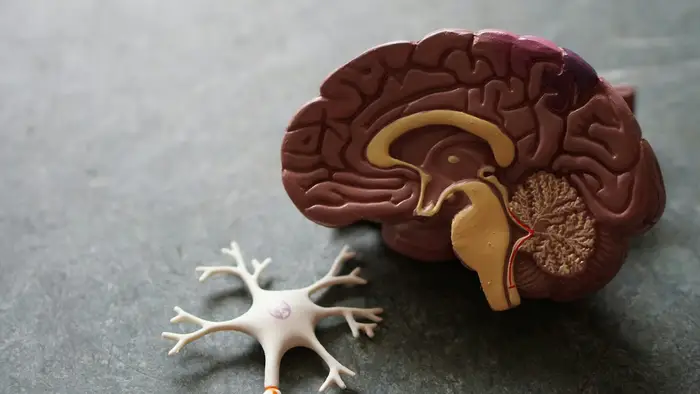
Illustration: after the jerking stops, calm and quiet matter more than any dramatic intervention.
The Verdict
Can you swallow your tongue during a seizure? No. The claim is False.
The tongue is anchored to the floor of the mouth by the lingual frenulum and the muscles of the mouth and throat, and no seizure can detach it or draw it into the airway. A 2020 review in the journal Seizure, examining more than a century of medical and popular literature, concluded flatly that one cannot swallow their tongue during a seizure and that foreign objects should not be placed into a seizing person’s mouth. The Epilepsy Foundation, the NHS, and every major first-aid authority agree: do not put anything — not a spoon, not a wallet, not a finger — in the mouth of a person having a seizure.
The real risks during a seizure are different from the mythical one. The person may bite their tongue or cheek, which is painful but rarely serious. They may injure themselves against nearby objects, which is why the area should be cleared. And they may be harmed by a bystander’s intervention — broken teeth, a choking hazard from a shattered object, a bitten hand, or an injury from restraint. The genuine airway risk comes after the seizure, when an unconscious person’s tongue can relax backward, and the remedy for that is the recovery position: turn them on their side, mouth toward the ground, and let gravity do what no object in the mouth ever could.
So the verdict is False, with a warning attached. This is one of the rare myths where believing it does not merely waste time or money. It changes what a frightened person does in an emergency, and the wrong action can cause the very injury it was meant to prevent.

Illustration: recovery after a seizure is usually quiet — rest, reassurance, and time.
What to remember
If you remember nothing else from this article, remember three words and one prohibition. Stay with the person and time the seizure. Keep them safe by moving hazards away and cushioning their head. Turn them on their side when the jerking stops. And never, under any circumstances, put anything in their mouth.
The next time you see a film character force a wallet between a seizing person’s teeth, you will know what you are watching: not heroism, but a 19th-century misunderstanding that survived into the age of streaming. The real heroism in that scene is quieter. It is the person who kneels nearby, moves a chair out of the way, slips a jacket under a stranger’s head, looks at their watch, and waits. That person is not doing nothing. They are doing the only thing that helps — and, just as importantly, refusing to do the one thing that hurts.
This article is general information based on published first-aid guidance, not a substitute for medical advice or professional first-aid training. If you regularly care for someone with epilepsy, consider taking a seizure first-aid course from a recognized provider so that Stay, Safe, Side becomes muscle memory before you ever need it.