Should You Really 'Feed a Cold and Starve a Fever'? The 450-Year-Old Rule That Modern Medicine Rejects
You know the script. You wake up with a scratchy throat, a stuffed nose, and that unmistakable heaviness behind your eyes. Within the hour, someone — your mother, your partner, a well-meaning coworker — delivers the ancient prescription: feed a cold, starve a fever. Eat up if it’s just a cold, but if a temperature shows up, step away from the kitchen. The rhyme makes it feel like wisdom. It has survived roughly four and a half centuries of medical revolutions, from bloodletting to antibiotics to mRNA vaccines, passed from grandparent to grandchild like a family heirloom.
But a rhyme is not evidence. And when you trace this particular rhyme back to its source, you find something remarkable: the advice was written down in 1574, by a dictionary author, working from a theory of human biology that every modern physician considers wrong. Since then, exactly one small study has ever given the saying a serious second look — and even its own authors never claimed it was dietary advice. Meanwhile, the immunologists who have actually studied how the body fuels itself during infection have arrived at a conclusion that is almost the opposite of the adage.
So is there anything to it? ProofNews dug into the history, the studies, and the current guidance from major medical centers. The short version: the rule gets one half roughly right, the other half dangerously wrong, and it contradicts itself the moment a cold brings a fever along — which, as any doctor will tell you, is most of the time.

The Claim, Exactly As People Hear It
The adage comes in a few word orders — “feed a cold, starve a fever” and “starve a cold, feed a fever” are both common, though the first is the standard form — but the meaning is consistent: when you have a cold, you should keep eating normally, even heartily; when you have a fever, you should eat little or nothing. The logic, as most people absorb it, is intuitive. Food generates warmth and energy, which fights off the chill of a cold. A fever means the body is already overheated, so adding food would add fuel to the fire. Withholding food, by this reasoning, helps the body cool down and starves the illness itself.
That intuition is precisely the problem. It describes a body that works like a wood stove — add fuel, get more heat; remove fuel, get less. Human metabolism during infection does not work like a wood stove, and the “logic” behind the saying is not folk wisdom refined over centuries of observation. It is a fossil of a specific, discredited medical theory, frozen in rhyme.
A Dictionary Entry From 1574
The saying first shows up in print in John Withals’ English-Latin dictionary, published in 1574, which declares flatly that “fasting is a great remedy of fever.” Withals was not a physician. He was a schoolmaster compiling a dictionary, and he was recording what the physicians of his day believed — which was the humoral theory of medicine, the idea that health depended on the balance of four bodily fluids: blood, phlegm, yellow bile, and black bile.
Within that framework, the advice made a kind of sense. A cold was understood as a chill of the humors, so the prescription was to fuel the body’s inner fire with food and drink. A fever was an excess of heat, so the prescription was to withhold fuel and let the body cool — sometimes alongside bloodletting, which was meant to drain off the heated blood directly. Medical historians note that the underlying idea may be even older: some accounts trace therapeutic fasting for fevers back to Hippocrates, more than two thousand years ago.
The theory behind the rule died centuries ago. Humoral medicine collapsed under the weight of germ theory, and no physician today believes that food heats the humors or that fasting cools them. But the rhyme survived its own theory. It was repeated in households through the 18th and 19th centuries, gained fresh popularity by the 1850s, and is still being repeated in 2026 — four and a half centuries after a dictionary author wrote it down, based on medicine that no one defends anymore.
That survival alone does not make it wrong. Plenty of folk remedies turned out to have real mechanisms. Honey does soothe coughs. Chicken soup does have measurable effects. The question is not where the saying came from but whether the evidence supports it — and on that, the record is remarkably thin.

What Doctors Actually Say
Modern medicine’s verdict on the adage is about as blunt as medical language gets. The University of Virginia’s UVA Today asked associate professor of nursing Beth Quatrara to evaluate the saying directly. Her answer: “There are health care traditions that have been passed down from generation to generation, and some of them do work. There’s science that shows eating chicken noodle soup has benefits when you’re sick. But feeding a cold and starving a fever is definitely not backed.”
Quatrara also identified the rule’s most obvious structural flaw — the one that anyone who has ever actually been sick will recognize immediately: “Some of the problem with the advice is that fevers and colds can occur at the same time. A cold typically implies a viral infection, and fevers are one way the body fights infections of any kind.” The rule demands that you sort your illness into one of two opposite treatments, but the illnesses themselves refuse to sort. A cold with a low-grade fever is one of the most common presentations in medicine. Follow the rhyme literally and you are told to both eat and not eat.
The guidance from Johns Hopkins Medicine, as summarized in recent coverage of the topic, is shorter and directly contradicts the adage: eat if you can, and drink even if you cannot eat. Dr. Sonali Ruder, a board-certified emergency physician, put it this way: “The old adage ‘feed a cold, starve a fever’ has been around for years but isn’t really accurate according to modern medicine.” Her prescription for viruses is “rest, fluids, and proper nutrition to support your immune system,” with hydration singled out as especially critical because it “helps combat the fluid losses that occur with fever, vomiting, [and] diarrhea.”
Notice what is absent from every one of these expert statements: any suggestion that withholding food helps. The modern consensus is not a tweaked version of the old rule. It is the old rule with its second half deleted.
The One Study That Gave the Saying a Second Look
If the adage were pure fiction, this would be the end of the story. But in 2002, a group of Dutch researchers published a small study that briefly made “feed a cold, starve a fever” look like it might contain a grain of truth — and it is worth examining, because it is the closest thing to scientific support the saying has ever had.
The researchers measured immune markers in volunteers after fasting and after eating. Their headline findings, as summarized when the study resurfaced in popular coverage, were striking: after 24 hours of fasting, levels of interferon-gamma — a protein central to the immune response against viruses — fell by roughly 83 percent. Eating a meal replacement, by contrast, raised interferon-gamma levels. Meanwhile, fasting boosted levels of interleukin-4, an anti-inflammatory molecule. Put crudely: eating seemed to support the antiviral immune response, while fasting seemed to support the anti-inflammatory one. Feed a cold, starve a fever — in miniature, in a laboratory.
Before anyone restructures their sick days around this, the caveats are enormous. The study was tiny. It measured immune signaling molecules in the blood, not clinical outcomes — nobody showed that fasting volunteers recovered from fevers faster or that fed volunteers beat colds sooner. A change in a biomarker is not a treatment effect, and immunology is full of biomarkers that moved impressively in small studies and meant nothing for patients. The findings were never replicated in a clinical trial, and no major medical body has ever cited the study as a basis for dietary advice during illness. It is a single, small, unreplicated data point about blood chemistry — interesting to researchers, useless as a prescription.
There is also a deeper irony in how the study is usually retold. Its actual pattern — eating supports antiviral immunity, fasting shifts the system toward anti-inflammatory signaling — does not map onto “colds” and “fevers” as categories at all. Colds are viral, so the study’s logic would say feed them, which matches the adage’s first half. But fevers are not a type of infection; they are a symptom, and they accompany viral infections constantly. If eating supports the antiviral response, then eating through a viral fever is exactly what the study would recommend — the opposite of “starve a fever.” Even the saying’s best scientific friend does not actually agree with it.
What Fighting an Infection Really Costs
To understand why modern doctors say to eat, it helps to understand what your body is actually doing when you are sick. An immune response is one of the most metabolically expensive things a human body does. Immune cells proliferate rapidly, run hot, and burn through energy at far above baseline rates. A fever itself raises the metabolic rate — roughly speaking, every degree of temperature elevation increases energy expenditure by a meaningful fraction. You are not a wood stove, but you are, in a sense, running a furnace: and the furnace is the immune system.
This is why appetite loss during illness is so interesting, and so widely misunderstood. When you are sick, you usually do not feel like eating. That is real biology, not imagination: infection triggers a coordinated set of responses — fatigue, social withdrawal, loss of appetite — that researchers call sickness behavior, driven by inflammatory signaling. The body appears to deliberately redirect resources away from digestion and toward the immune response. For centuries, people interpreted that loss of appetite as a medical instruction: the body wants no food, so give it none. The 1574 version of the advice essentially turned a symptom into a prescription.
But a reduced appetite is not the same as a need to fast. The modern reading is subtler: do not force-feed yourself when you feel nauseated, but do not deliberately withhold nutrition either. Eat what appeals to you, in whatever amounts you can manage, and prioritize fluids above everything. The distinction matters because “starve a fever” does not mean “eat lightly if you feel queasy.” It means actively depriving a body that is burning extra fuel to fight an infection.

The Yale Experiment That Complicated Everything
The most serious scientific work ever done on the feeding-versus-fasting question came from Yale School of Medicine, and its results are a masterclass in why folk rules fail. In 2016, researchers in Ruslan Medzhitov’s laboratory, led by Andrew Wang, published a study in the journal Cell titled “Opposing Effects of Fasting Metabolism on Tissue Tolerance in Bacterial and Viral Inflammation” (Cell, vol. 166, pp. 1512–1525). The experiment was elegant: they gave mice either a viral-type or bacterial-type inflammatory challenge, then manipulated whether the animals received glucose or were kept in a fasting state.
The results refused to cooperate with any simple rule. In mice with viral inflammation, glucose feeding was protective — animals that received sugar survived, while fasting made outcomes worse. But in mice with bacterial inflammation, the pattern flipped: glucose administration worsened outcomes, while the fasting state, which produces protective ketone bodies, improved them. The same nutrient was lifesaving in one type of infection and harmful in another. The researchers’ framework was not “feeding versus fasting” but something called disease tolerance — the body’s ability to survive the collateral damage of its own inflammatory response — and they showed that the optimal metabolic state depends entirely on the nature of the threat.
For the old adage, this is devastating in a precise way. The saying assumes that the right nutritional strategy can be read off the symptom: cold, eat; fever, fast. The Yale work suggests that if metabolism matters at all, it tracks the type of pathogen — viral versus bacterial — not the symptom. And since most fevers that ordinary people experience are viral (colds, flu), the study’s logic points, if anywhere, toward feeding through a viral fever: the exact opposite of “starve a fever.”
Two enormous caveats apply, and honesty requires stating both. First, these were mice, not people, and the challenges were experimental models of inflammation, not colds and flus. Mouse metabolism differs from human metabolism in ways that routinely sink promising findings. Second, nobody in the study was testing dietary advice; they were probing fundamental biology. No responsible scientist would turn this paper into a recommendation to mainline glucose during the flu. But that is exactly the point: even the best science in this area does not support a folk rule. It suggests the underlying biology is far too complex for one — and that the complexity runs against the adage, not for it.
What You Should Actually Do
Strip away the rhyme and the surviving guidance from every major medical source converges on something unglamorous and consistent. The University of Virginia’s Quatrara emphasizes fluids above all: when you are sick, secretions thicken and congest, and hydration thins them. Water, broth, and other clear fluids are the priority; alcohol, excess caffeine, and very sugary drinks are worth avoiding until recovery. Johns Hopkins’ formulation — eat if you can, drink even if you cannot — captures the hierarchy exactly.
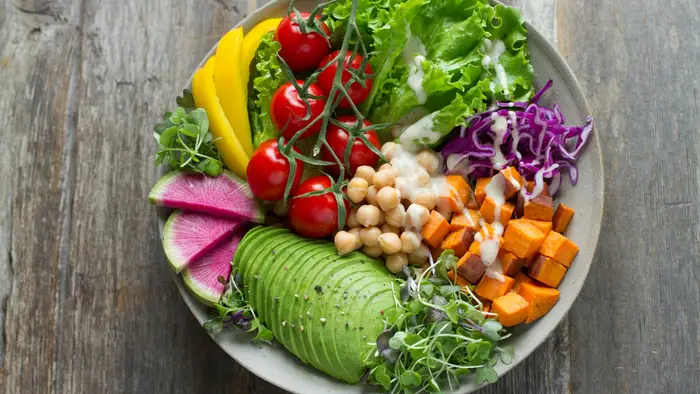
On food, the advice is permissive, not prescriptive. Eat what you can tolerate. Nutrient-dense, easy foods — soups, broths, fruits, simple proteins — give the immune system raw material without demanding much digestive effort. Chicken soup, the folk remedy Quatrara notes has actual science behind it, is essentially fluids plus protein plus warmth in a bowl: it hydrates, it nourishes, and the steam helps congested airways. There is no list of forbidden foods for a fever, and no requirement to hit a calorie target. If nausea makes eating miserable, small amounts and patience beat force-feeding. The body will tell you when appetite returns, and it usually does so before the infection is fully cleared — a sign that the metabolic emergency is easing.
What about deliberate fasting through a fever — the actual “starve” half of the rule? Nothing in the evidence supports it as a strategy, and there are concrete reasons to avoid it. Fever increases fluid loss through sweating and faster breathing; fasting often reduces fluid intake alongside food, compounding dehydration. A weakened, undernourished body is not a body fighting at full strength. For children, older adults, and anyone with a chronic condition, deliberate fasting during illness carries real risk, which is one reason pediatric guidance has long since abandoned the practice of starving feverish children — a practice the 1574 rule helped normalize for centuries.
One more piece of practical guidance, from Quatrara: know when the kitchen-table advice ends and medical care begins. A fever over 100°F (37.8°C) that persists, difficulty breathing, dehydration, or symptoms that worsen instead of improving are reasons to seek care, not to adjust your menu. No dietary strategy, folk or modern, substitutes for that judgment.

The Verdict
Misleading. “Feed a cold, starve a fever” is a 450-year-old rule built on a dead theory of medicine, and modern evidence dismantles it from every direction.
The first half is roughly right by accident: eating normally through a cold matches current guidance, but not because food “fuels the inner fire against the chill.” It matches because the immune system needs raw material and there is no reason to withhold it. The second half — deliberately starving a fever — has no clinical evidence behind it, contradicts the guidance of every major medical center, and risks the two things a sick body can least afford: dehydration and undernourishment during a period of elevated metabolic demand.
The rule also fails its own logic test. Colds frequently come with fevers, and fevers are a general immune response, not the opposite of a cold. A rule that tells you to simultaneously eat and fast is not a rule; it is a rhyme in search of a meaning. The single small study sometimes cited in the saying’s defense measured blood markers in a handful of volunteers, was never replicated clinically, and does not actually endorse the adage’s categories. And the most rigorous science in the area — the Yale work on fasting metabolism and infection — suggests that if nutrition interacts with infection at all, it tracks the pathogen, not the symptom, and certainly not a 16th-century dictionary entry.
Replace the rhyme with the real guidance. Feed them both — or rather, eat what you can, when you can. Hydrate relentlessly: water, broth, anything that thins the secretions and replaces what fever takes. Rest. And retire the idea that your grandmother’s grandmother’s doctor, working four centuries before germ theory, left you a nutritional strategy worth following. Some heirlooms belong in a museum, not a medicine cabinet.