Do Humans Really Use Only 10% of Their Brains? We Checked the Science
You have heard it a thousand times, and each time it sounded faintly thrilling. We humans, the story goes, use only 10 percent of our brains. The other 90 percent sits there in the dark, a dormant supercomputer waiting to be switched on. Imagine what you could do with the rest — total recall, genius-level intellect, perhaps even supernatural powers. It is one of the most seductive ideas in all of popular psychology, and it has fueled motivational seminars, bestselling self-help books, and at least two Hollywood blockbusters.
There is just one problem. None of it is true. Not the percentage, not the dormant reserves, not the implication that somewhere inside your skull a sleeping genius is waiting to be unlocked. The claim has been examined for decades by psychologists and neuroscientists, and the evidence against it is, in the words of one Scientific American investigation, “overwhelming.” But the myth’s origins are genuinely interesting — a tangle of misquoted philosophers, misunderstood brain research, and one very influential book foreword — and the reasons it refuses to die tell us something important about how bad science goes viral. Let us open it up.
The Claim
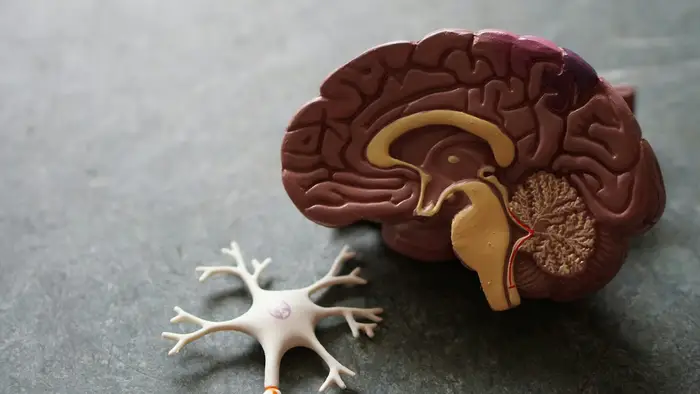
The claim, in its most common form, states that human beings use only 10 percent of their brain’s capacity — sometimes phrased as 10 percent of the brain itself — and that the remaining 90 percent is unused, untapped potential. Unlock that hidden reserve, the story continues, and extraordinary things become possible: perfect memory, superhuman intelligence, telekinesis, time manipulation.
The idea hit the big screen in Luc Besson’s 2014 science-fiction film Lucy, in which Morgan Freeman plays a neurologist who tells a packed auditorium, “It’s estimated most human beings only use 10 percent of their brains’ capacity.” The protagonist then unlocks her remaining brain power and gains the ability to manipulate matter and time. The premise also drove the plot of the film Limitless, in which a “smart drug” unlocks the brain’s supposedly dormant regions. A modern science explainer notes that there is simply “no neuroscience behind the idea that gradually activating larger percentages of the brain would produce those effects.”
The claim’s power lies partly in how it is delivered. You hear it not from scientists but from motivational speakers on brightly lit stages, in email inboxes from brain-training app advertisements, in self-help books that promise to teach you how to access your “unused” potential, and occasionally even in classrooms. It flatters the listener: whatever you have achieved so far, the real you — the genius, the prodigy, the superhuman — is still waiting inside, blocked only by the fact that nobody taught you how to unlock it. That framing makes the myth easy to believe and hard to abandon, because abandoning it feels like giving up on yourself.
Before we reach the verdict, it is worth asking how a claim with no scientific foundation survived for more than a century — and what the research actually shows.
A Curious Origin Story
The psychologist Barry Beyerstein, who investigated the myth’s origins for Scientific American, found something striking: the ten-percent claim appears to have no real scientific origin at all. Instead, it grew out of a chain of misquotations and misinterpretations that began around the turn of the twentieth century.
The first link in that chain is the American philosopher and psychologist William James. In his 1907 essay “The Energies of Men,” James wrote about human potential in soaring, poetic terms: “We are making use of only a small part of our possible mental and physical resources.” He was speaking about effort and motivation — about the sense that people live “below our highest notch of clearness,” as he put it — not about the anatomy of the brain. He had no brain scans, no lesion studies, and no data to support a numerical claim. He was writing philosophy, not neuroscience.
But that nuance did not survive contact with popular culture. In 1936, the writer and broadcaster Lowell Thomas wrote a foreword to Dale Carnegie’s blockbuster How to Win Friends and Influence People — one of the best-selling self-help books in history — in which he declared: “Professor William James of Harvard used to say that the average man develops only ten percent of his latent mental ability.” James had said nothing of the sort. Thomas took the liberties that bestselling forewords sometimes take, and a falsely precise percentage was born. Scientific American later noted that Thomas and other popular authors “took liberties with James’s writings by proposing that we use only about 10 percent of our brain.”
The myth gathered further momentum in the 1970s, when the Bulgarian-born psychologist and educator Georgi Lozanov promoted his suggestopedia teaching method on the belief “that we might be using only five to ten percent of our mental capacity.” Along the way, the origin of the myth was also attributed to the famed neurosurgeon Wilder Penfield, the U.S.-born first director of the Montreal Neurological Institute of McGill University — another case of a famous name being attached to a claim it never quite made.
Penfield’s name is an instructive case study in how the myth accretes credibility. He was a giant of mid-twentieth-century neuroscience whose stimulation experiments mapped the motor and sensory cortex in extraordinary detail. But brain mapping and brain-capacity percentages are entirely different things, and attributing the ten-percent figure to him confuses a famous neurosurgeon with a claim he never authored. The pattern repeats: a respected name lends the myth borrowed authority, and the borrowed authority makes the next retelling easier.
That pattern is part of what drew the psychologist Barry Beyerstein to investigate the myth for Scientific American. Writing in a piece titled “Uncovering Brainscams,” Beyerstein examined a family of popular misconceptions about the brain and found that the ten-percent claim, the most deeply entrenched of them all, had seductive appeal precisely because we would love to believe our brains harbor an enormous reservoir of untapped potential. Yet, as he documented, functional brain-imaging studies had consistently failed to turn up any region of the brain that is perpetually inactive — and research on brain-damaged patients showed that damage to almost any brain area produces at least some psychological deficit.
There is one more candidate origin, and it comes from inside neuroscience itself — or rather, from neuroscience’s mistakes. Early in the history of brain research, investigators found that large regions of the cerebral cortex appeared “silent” under their crude instruments: stimulating them produced no obvious effect. To a casual observer, a silent region looks like a useless region. But modern measurement revealed that these areas are far from silent. They form what neuroscientists call the brain’s “association cortex,” which plays a vital function in connecting perceptions, thoughts, and emotions across diverse brain areas. The “silence” was an artifact of primitive tools, not an absence of function.
A related misunderstanding involves the brain’s non-neuronal cells, the glia. Early research revealed that a large share of brain cells were glial cells, which appeared to have only minor supporting functions — prompting some to wonder whether most of the brain was mere filler. That interpretation has not survived either. Glial cells are now known to be essential: different types maintain the chemical environment around neurons, produce myelin, participate in immune responses, and support communication between brain cells. Researchers now know that glia are involved in far more than simply holding neurons together. Even the popular claim that glia outnumber neurons ten to one has been revised by modern cell-counting studies, which suggest the overall numbers of neurons and non-neuronal cells are much closer than that simplistic ratio implies.
What Brain Scans Actually Show
The decisive evidence against the 10-percent myth arrived with brain imaging. Using functional magnetic resonance imaging (fMRI) and positron emission tomography (PET), scientists can watch the brain at work — and what they see looks nothing like a mostly dormant organ.
Functional brain-imaging studies have consistently failed to turn up any region of the brain that is perpetually inactive. Brain-imaging reviews report that PET and fMRI scans show that over the course of a normal day essentially all of the brain lights up, and there is no idle ninety percent sitting in reserve. Even during simple, routine tasks — talking, walking, listening to music — imaging shows activity across almost every region of the brain.
A neurology explainer from the University of Texas puts the point vividly: even when you believe you are doing nothing, your brain is busy with tasks you never notice, such as coordinating movement and balance, regulating body temperature, and making sure your organs are functioning. Over a 24-hour period, you have likely activated every region of your brain. The Mayo Clinic neurologist John Henley summarized the imaging evidence this way: “Evidence would show over a day you use 100 percent of the brain.”
It is worth noting exactly what the scans do and do not show. You do not use every neuron simultaneously — different neural circuits are “recruited” depending on the task at hand, which is simply efficiency, not waste. Your brain does not run every process at full blast around the clock. But every region has a job, and over a full day the entire brain is put to work.
There is also a telling counterpoint: “more brain activity” is not automatically better. Uncontrolled increases in neuronal activity can be harmful — seizures, for example, involve abnormal synchronized activity across neural networks. Human cognitive performance depends on efficient coordination and timing rather than simply turning everything on harder. The popular image of brainpower as a dimmer switch waiting to be cranked to maximum gets the biology exactly backwards.

The Case Against the Myth
Beyond imaging, several independent lines of evidence make the 10-percent claim untenable.
First, brain damage. Research on brain-injured individuals reveals that a lesion to almost any brain area will produce at least some psychological deficits. If 90 percent of the brain were genuinely idle, we would expect people to walk away from large brain injuries with their cognition intact. That is not what clinicians observe. Neuroscientists have mapped functions to virtually every part of the brain — the occipital lobe handles vision, the hippocampus manages memory, Broca’s area helps us talk, the cerebellum keeps us balanced — and there are no freeloaders. No region has been found whose loss goes unnoticed.
Second, energy economics. The human brain accounts for only about 2 percent of body weight yet consumes close to 20 percent of the body’s energy — a metabolic budget so large that it is difficult to square with the idea that nine-tenths of the organ is decorative. Natural selection is famously frugal; an organ that burns a fifth of the body’s fuel budget while sitting mostly unused would have been a prime target for elimination long ago.
Third, sleep. Neuroimaging has shown regular activity throughout the entire brain even when we are asleep — a state in which, by the myth’s logic, the brain should be at its most dormant. It is not.
Fourth, the cell census. The once-popular notion that the brain is mostly inert filler — first from the “silent” cortex, then from the glial cells — has collapsed under better measurement. The association cortex turned out to be one of the brain’s busiest integrators, and the glia turned out to be indispensable partners of neurons rather than packing material.
Finally, there is the truncation theory: one plausible account holds that the myth began as a reasonable observation — that at any given moment we use only a small percentage of our brain — which was then truncated and misquoted into the claim that we use only 10 percent of our brain in total. A momentary snapshot was mistaken for a lifetime capacity.

Why the Myth Refuses to Die
If the evidence is so one-sided, why does the 10-percent myth keep showing up in classrooms, self-help books, TED-style talks, and movie plots until it hardens into something that feels like common knowledge?
Hollywood is one reason. The “unlock hidden powers” trope is irresistible to storytellers, and films like Lucy and Limitless gave the myth its biggest audiences. Lucy, reported at roughly $463 million in worldwide box office, embedded the false premise in the opening minutes — and, as one science writer observed, movies love the idea because it sells tickets. After watching Lucy, two neuroscience graduate students at Western University in Ontario, Ramina Adam and Jason Chan, were so frustrated by the misinformation that they set out to collect and debunk common misconceptions about how the brain works, contributing to a brain-myths feature in Popular Science in November 2015.
The self-help industry is another. Scientific American’s investigation noted that the 10-percent myth “has contributed to a plethora of self-help books and self-improvement gadgets, including commercially available devices that supposedly enable us to harness our unrealized capacities.” A myth that flatters its audience — you are secretly a genius, you just need this book, this seminar, this gadget — is a myth that sells.
And then there is the myth’s emotional design. It is a fantasy of untapped potential, a story that says your limits are illusions. That is an appealing thought, and appealing thoughts are notoriously resistant to evidence. Teachers sometimes repeat it with the best of intentions, hoping to motivate students; seminar hosts repeat it because it makes the next product — the course, the device, the app — sound like the key to a vault. The neuroscience review The Neuroscience Review counts the ten-percent claim among the eight most stubborn brain myths still circulating in classrooms, books, and talks, precisely because repetition hardens a slogan into something that feels like common knowledge.
But the comforting twist is that the truth is more impressive than the fantasy. Your brain is not a warehouse with 90 percent of the shelves empty. It is an organ that burns a fifth of your energy, activates nearly every region over a single day, integrates perceptions and emotions across a vast association network, and never truly rests — even while you sleep. You do not have a dormant supercomputer in your head. You have something better: one that is already on.

The Verdict
Verdict: False.
The claim that humans use only 10 percent of their brains is a myth with no scientific foundation. Brain imaging with fMRI and PET shows activity across essentially every region of the brain over the course of a normal day. Lesions to almost any brain area produce measurable deficits. The brain’s enormous energy appetite — about 20 percent of the body’s budget for roughly 2 percent of its weight — makes no sense for an organ that is nine-tenths idle. There is no dormant reserve, no waiting supercomputer, no unused 90 percent.
The myth’s origins are a documented chain of distortion: William James’s 1907 philosophical remarks about mental effort were misquoted by Lowell Thomas into a falsely precise percentage in his 1936 foreword to Dale Carnegie’s How to Win Friends and Influence People, and early neuroscience’s “silent” cortex and misunderstood glial cells supplied apparent scientific cover that later research stripped away.
One grain of truth survives inside the myth, and it is worth preserving: William James was right that most of us live below our highest notch of effort, learning, and focus. You can train your memory, build new skills, and think more clearly. That is real, and it is entirely consistent with a brain you already use in full. It is just not a matter of unlocking dormant brain tissue — it is a matter of using well what is already switched on. The 10-percent myth promises you a secret reservoir of genius. The science gives you something better: proof that the brain you have is already remarkable, already busy, and already all yours.