Is MSG Dangerous? The Truth Behind the 'Chinese Restaurant Syndrome' Myth
Walk into many restaurants across the United States and you will see a small reassurance on the menu, printed like a promise: “No MSG.” Home cooks browsing recipes warn each other off the little white powder that makes everything taste better. Wellness influencers list it alongside trans fats and artificial dyes as something to purge from the pantry. And if you tell a dinner companion that MSG is perfectly safe, you may get a look that suggests you have just defended lead paint.
The claim is everywhere and it is stated with confidence: monosodium glutamate is dangerous. It causes headaches, heart palpitations, numbness, flushing, sweating and a whole catalogue of unpleasant sensations. The condition even has a name that has stuck for nearly six decades — “Chinese restaurant syndrome.” But here is the remarkable thing about this particular piece of conventional wisdom: it began with a single letter to a medical journal, and the evidence gathered since then has failed, study after study, to support it. The claim that MSG is dangerous at the doses people actually eat is false.
The claim
Strip the story down and the claim comes in two parts. First, the softer version: MSG can cause an assortment of unpleasant short-term symptoms — headache, flushing, palpitations, numbness, weakness — in ordinary people eating ordinary food. Second, the harder version: MSG is a toxin, implicated in brain damage, obesity and chronic disease, and best avoided entirely. Both versions rest on a origin story that began in the spring of 1968.
A letter to the editor that changed food history
On April 4, 1968, the prestigious New England Journal of Medicine published a short letter titled “Chinese Restaurant Syndrome.” Its author was identified as Robert Ho Man Kwok, who wrote that whenever he ate at a Chinese restaurant he experienced a “strange syndrome” — generalized weakness, palpitations and numbness in his arms. Kwok suggested several possible causes for his symptoms: sodium, alcohol from the cooking wine, and possibly monosodium glutamate, a seasoning widely used in Chinese cooking.
The letter did not stop at one man. In the issues that followed, the journal received a flood of similar anecdotes from readers describing headaches, dizziness, tightness of the jaw, chest and back pains. The media picked it up — a follow-up article in the New York Times helped the idea of “Chinese restaurant syndrome” take off — and a phenomenon was born. Eating MSG was soon associated with a whole roster of symptoms: headache, hives, throat swelling, itching, belly pain.
There is an extraordinary postscript to the letter itself. Decades later, serious doubts emerged about whether it was ever a genuine medical report at all. Science journalists have reported that the original letter is now considered a hoax written under a pseudonym — and that there was indeed a real Dr. Kwok, a researcher and pediatrician, who died in 2014 and had nothing to do with the letter. One man, Howard Steele, later claimed on the radio program This American Life that he had invented the Ho Man Kwok identity himself — though his claim is unproven. What is not in doubt is the disproportionate power of one anecdotal letter: a single unverified report in a respected journal, amplified by the press, seeded a belief that would shape food culture for half a century.
The experiments that turned suspicion into fear
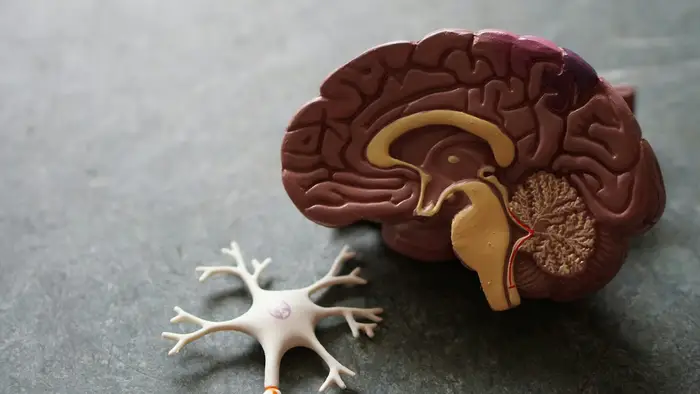
The letter might have faded as a curiosity if it had not been followed, a year later, by laboratory work that seemed to confirm the danger. In 1969, Dr. John Olney, a researcher at Washington University, published a study in the journal Science that found newborn mice dosed with MSG developed brain lesions, stunted skeletal growth, obesity and, in some cases, female sterility. A few years later, Olney published a new study finding similar defects in infant primates. The headlines practically wrote themselves: the white powder in your takeout was damaging brains.
There was a problem with these experiments, and it was a big one. The animals were not fed MSG in food. They were injected with extremely high doses of it — in some experiments directly into the abdomens of newborn mice — at concentrations far beyond anything a human would encounter at a dinner table. Injecting a concentrated solution of almost anything directly into a developing animal’s body can cause damage; as critics later noted, a sugar solution can damage cells too if it is injected under the skin in high enough doses. The studies did not test MSG as a food ingredient, and they could not explain a basic feature of the supposed syndrome: why the symptoms would strike some people and not others.
That distinction — between eating a substance and injecting a massive dose of it — is the fault line running through the entire MSG debate. The body handles glutamate eaten in food very differently from a chemical injected straight into tissue. The gut metabolizes most of the glutamate in food before it ever reaches the bloodstream, and the body itself cannot distinguish between synthetic MSG added to a dish and the glutamate that occurs naturally in food: it metabolizes both in exactly the same way.
When scientists actually tested people — blinded
Anecdotes and mouse injections are one thing. What happens when you give people MSG or a placebo, without telling them which is which, and watch what happens? Between 1968 and 1990, nineteen studies explored the impact of MSG on people, and the results were revealing. When researchers measured objective criteria — blood pressure, skin temperature, heart rate — they found little difference between people who said they reacted to MSG and those who did not. Some studies recorded subjective complaints like dizziness or flushing, but they proved hard to reproduce.
The most elegant test came from Australia. Chemist Leonid Tarasoff and statistician Michael Kelly of the University of Western Sydney ran a double-blind study on 71 volunteers, giving them high doses of MSG — or a placebo of gelatin powder — before a standard breakfast. About 15 percent of the volunteers reported some reaction to MSG. But 14 percent also reported aftereffects when given the placebo. “Most had no reaction at all to MSG or the placebo,” Tarasoff said. The supposed sensitivity to MSG was, in that study, essentially indistinguishable from the placebo effect.
That pattern has held up in larger and more rigorous work since. The reactions some people attribute to MSG have not been consistently demonstrated in double-blind, placebo-controlled human trials — the gold standard for establishing cause and effect. A large multicenter trial designed specifically to test people who claimed to react to MSG found no consistent, reproducible pattern of responses. And in January 2018, the International Headache Society quietly delivered its own verdict on one of the claim’s most durable elements: it removed MSG from its list of causative factors for headaches.
A study commissioned by the FDA reached the conclusion that has been repeated, with variations, ever since: unless people were given large doses of MSG under precise conditions, or an individual was particularly sensitive to MSG, the seasoning would not cause negative side effects in healthy individuals.

What the world’s food authorities concluded
MSG is one of the most extensively researched food ingredients in the world, and the regulatory record is unusually consistent.
The U.S. Food and Drug Administration classifies MSG as GRAS — “generally recognized as safe.” Despite the public backlash, the agency never removed it from the list. In 1970, a National Research Council panel under the National Academy of Sciences investigated MSG on the FDA’s behalf and concluded it was safe for consumption.
The Joint FAO/WHO Expert Committee on Food Additives (JECFA) evaluated glutamic acid and its salts in 1971, 1974 and 1987, and allocated an “acceptable daily intake (ADI) not specified” — regulatory language meaning that on the basis of all available chemical, biochemical and toxicological data, the total dietary intake of glutamates at the levels used to flavor food does not represent a hazard to health, so no numerical limit was deemed necessary. That position was maintained in later reviews.
The one authority that took a stricter line is the European Food Safety Authority. In 2017, EFSA’s panel re-evaluated glutamic acid and glutamates as food additives (E 620–625) and set a group acceptable daily intake of 30 milligrams per kilogram of body weight per day. For an 80-kilogram adult, that works out to no more than 2.4 grams of added MSG per day — still well above what most people consume. Europeans average less than a gram of added MSG a day (0.3 to 1 gram), while intakes in Asia run between 1.2 and 1.7 grams a day. EFSA did note that its exposure estimates exceeded the new ADI for some population groups and recommended that the European Commission consider revising maximum permitted levels in the food categories contributing most to exposure.
But EFSA’s 2017 number is the outlier, and it has been sharply criticized by other experts. In 2018, a panel of experts reviewed all available aspects of glutamate metabolism and safety and concluded their findings did not warrant any change to the existing ADI of “not specified.” A detailed critique in the Annals of Nutrition and Metabolism argued that EFSA’s chosen animal study had never been used by any regulatory authority worldwide for glutamate safety assessment despite being available for nearly 40 years, and that a proper assessment would support an ADI of at least 240 milligrams per kilogram per day — eight times higher. Food Standards Australia New Zealand said the European update did not raise any new safety concerns beyond what had already been assessed. The consensus view among regulators remains: at the levels used in food, MSG is not a hazard to the general population.
The molecule was never foreign to begin with
One of the ironies of the MSG panic is how ordinary the molecule is. MSG was not dreamed up in a laboratory as an artificial invention — it was identified in a pot of soup. In 1908, the Japanese scientist Dr. Kikunae Ikeda noticed that the savory taste of his seaweed broth was distinct from the four recognized basic tastes of sweet, sour, bitter and salty. He isolated the compound responsible — glutamic acid from kombu seaweed — and named the taste umami. The following year, MSG was patented and commercialized as AJI-NO-MOTO. Today it is made by a fermentation process that starts with corn, sugar cane or beets, much like yogurt or vinegar.
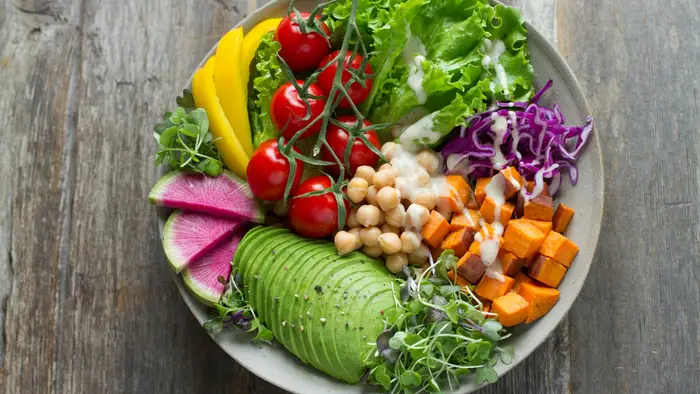
Glutamate is one of the most abundant amino acids in nature, and your body is swimming in it. Roughly two kilograms of glutamates are present in the average human body. It occurs naturally in foods across every cuisine: tomatoes, mushrooms, parmesan cheese, meat, peas, and even human breast milk, which contains it in meaningful amounts. A ripe tomato has free glutamate in it — nobody warns pregnant women about the “dangerous chemicals” in caprese salad. The body treats glutamate from a tomato and glutamate from a shaker of MSG as the same substance, because chemically, they are the same substance.
There is also a straightforward nutritional fact that rarely makes it into the scare stories: MSG contains only about 12 percent sodium by weight, compared with about 39 percent for table salt. That is why food scientists and chefs have long used it as a tool to reduce sodium — swapping out some of the salt for MSG keeps the flavor while cutting total sodium by a substantial margin. The seasoning that wellness culture treats as a sodium-laden villain can actually be a sodium-reduction strategy.

The other ingredient in the story: prejudice
There is a second reason the MSG myth has survived everything the science threw at it, and it has nothing to do with chemistry. The controversy was racially charged from the start. The letter that started it all was not titled “restaurant syndrome” — it was “Chinese Restaurant Syndrome,” and the stigma attached itself specifically to East Asian food. MSG is used heavily in Western processed foods — chips, canned soups, salad dressings, fast food — without generating the same fear, yet no one coined the term “Dorito syndrome” or “canned-soup syndrome.”
Food historian Ian Mosby has written that the fear of MSG in Chinese food is part of the United States’ long history of viewing the “exotic” cuisine of Asia as dangerous and dirty. The medical journals of 1968 received satirical responses that used race as a prop for humor; when the conversation moved into the mainstream press, the jokes fell away but the racial framing stayed. The chef Anthony Bourdain put it bluntly on his show Parts Unknown in 2016: “I think [MSG] is good stuff. I don’t react to it – nobody does. It’s a lie… You know what causes Chinese restaurant syndrome? Racism.”
The stigma has had real consequences. Chinese-American restaurants spent decades printing “No MSG” on their menus not because their food was dangerous, but because the myth was costing them customers — while the packaged-food industry used the same ingredient freely, sometimes hiding behind labels like “natural flavors” or “yeast extract.”
None of this is to say that nobody ever feels unwell after a meal. People can react to all sorts of things in food, and food-safety agencies acknowledge that a small subset of individuals may experience short-lived symptoms — the so-called “MSG symptom complex” of burning sensations, flushing, palpitations or weakness — at doses of several grams taken without food. That is a real, documented phenomenon, and it is worth distinguishing from the myth. What the blinded trials show is that these reactions are uncommon, mild, transient, and not reliably reproducible — which is why the claim that MSG is broadly dangerous, or that it causes “Chinese restaurant syndrome” in the general population, falls apart.

The Verdict
False. The claim that MSG is dangerous — that it causes “Chinese restaurant syndrome,” headaches and assorted ailments in the general population — is not supported by the evidence.
Decades of research, including double-blind placebo-controlled trials, have failed to show that MSG causes the symptoms attributed to it at normal culinary doses. The U.S. FDA classifies MSG as generally recognized as safe; the Joint FAO/WHO Expert Committee on Food Additives assigned it an ADI of “not specified,” meaning no numerical limit is needed at the levels used in food; and the International Headache Society removed MSG from its list of headache triggers in 2018. Even the strictest regulator, the European Food Safety Authority, set its 2017 limit well above typical consumption — and other expert reviews concluded even that limit was unjustifiably low.
The honest nuances are these: glutamate is a normal part of human biology and of foods in every cuisine; the body cannot tell added MSG from natural glutamate; a small minority of people may experience mild, short-lived symptoms at very high doses on an empty stomach; and the scare itself was built on a single dubious letter, flawed animal-injection studies, and a racial framing that Western foods using the same ingredient never received. If you enjoy the savory depth MSG adds to a dish, the science says you can stop worrying about the shaker — and start wondering why it took nearly sixty years to shake the myth.
The white powder was never the villain. The real lesson of MSG is how easily a story — one letter, one catchy name, one unexamined assumption — can outlive the evidence. The myth persisted not because it was proven, but because it was never really about the molecule at all.