No, MSG Doesn't Give You Headaches — the 1968 Letter That Turned a Seasoning Into a Scapegoat
You’ve heard the warning, probably from a well-meaning friend, a menu, or a restaurant window: “No MSG.” The white crystalline powder that makes soup taste deeper and snacks taste moreish has spent over fifty years carrying a reputation as a headache machine, a heart-palpitating toxin, a chemical to be feared. Diners ask for it to be left out. Manufacturers boast about its absence. And yet, if you ate a tomato today, or a piece of aged cheese, or a bowl of mushrooms, you consumed the very same compound — glutamate — that MSG is made of, and nobody warned you about any of it.
The claim that monosodium glutamate causes headaches and a constellation of symptoms after eating — the thing once called “Chinese Restaurant Syndrome” — is one of the most durable food myths of the modern era. It has survived decades of scientific testing, regulatory review, and debunking. It survives because it feels true: you eat a big restaurant meal, you feel flushed and headachy, and the strange white powder is an easy villain. But when researchers put that feeling to the test, hiding MSG in capsules and drinks so that neither the volunteers nor the scientists knew who got what, the villain kept vanishing. This is the story of how a four-paragraph letter, not a study, condemned a seasoning — and what half a century of evidence actually says.
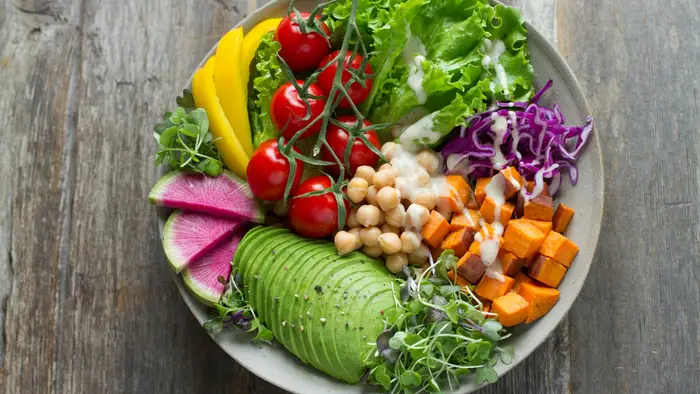
A fresh salad bowl: tomatoes, mushrooms, and cheese all contain natural glutamate, chemically identical to the glutamate in MSG.
The Claim
The version of the claim you meet in everyday life goes something like this: MSG, a flavor enhancer widely used in Chinese restaurants and processed foods, triggers headaches, flushing, sweating, numbness, tightness in the face and chest, heart palpitations, and weakness. Some people say they are “allergic” to it. Some say it causes migraines or asthma attacks. The implication is that MSG is a poison hiding in plain sight, one that regulators have somehow failed to catch, and that avoiding it is a simple act of self-protection.
It is a claim with a specific origin, and that origin matters, because the entire edifice rests on it. In April 1968, the New England Journal of Medicine published a letter from a Chinese-American physician, Dr. Robert Ho Man Kwok, describing a strange set of symptoms he experienced after eating at Chinese restaurants in the United States: numbness at the back of the neck, general weakness, and palpitations, beginning fifteen to twenty minutes after the first dish and lasting about two hours. Kwok was careful, in the way of a man writing a letter and not a paper. He listed several possible culprits — cooking wine, soy sauce, excessive salt — and added, as one speculation among others, that the symptoms might be caused by “the monosodium glutamate used to a great extent for seasoning in Chinese restaurants.”
That was it. Four paragraphs. No experiment, no control group, no data. But the letter landed in a culture primed to believe it. Chinese food was still exotic to many Americans, and suspicion of it had deep roots: the Chinese Exclusion Act had barred Chinese laborers from entering the country from 1882 until its repeal in 1943, and anti-Chinese prejudice had long painted Chinese cuisine as unsanitary or untrustworthy. Readers wrote in claiming similar experiences, journalists picked up the story, and within a few years the phrase “Chinese Restaurant Syndrome” was in common use. The speculation had hardened into a diagnosis, and the diagnosis had hardened into a stigma that fell, tellingly, not on the MSG in American canned soup or frozen dinners — where it was also widely used — but on Chinese restaurants specifically.
A year later, the fear gained what looked like scientific backing. In 1969, Washington University neurologist Dr. John Olney published a paper in Science reporting that infant mice injected with large doses of MSG developed brain lesions, along with stunted growth and obesity. The study was real, and it was alarming, and it was also almost entirely irrelevant to a human eating dinner: the animals were given massive doses by injection, bypassing digestion entirely, at a stage of development when the blood-brain barrier is immature. Injecting a substance into a baby mouse is not the same as seasoning a soup. But the headline version — “MSG damages brains” — traveled far further than the caveats, and it still circulates today in the darker corners of food discourse.
What MSG Actually Is
Before weighing the evidence, it helps to know what is actually being accused. Monosodium glutamate is the sodium salt of glutamic acid, an amino acid your body makes itself and that is present in virtually every protein you eat. When you digest protein, your gut releases free glutamate. It is, chemically, the same glutamate that is in MSG. Your body cannot tell whether a glutamate molecule came from a tomato or from a shaker of seasoning, because there is nothing to tell: they are identical.
The savory taste glutamate produces has a name — umami — identified in 1908 by Japanese chemist Kikunae Ikeda, who extracted glutamate from kombu seaweed broth and realized it was the source of the broth’s distinctive savoriness. Commercial production began the following year, and today MSG is made not by extraction but by fermentation of starch, sugar beets, sugar cane, or molasses — a process similar to the ones used to make yogurt, vinegar, and wine.
The scale of exposure is worth keeping in mind. According to the U.S. Food and Drug Administration, an average adult consumes roughly 13 grams of glutamate per day from the protein in food, while intake of added MSG is estimated at around 0.55 grams per day — a small fraction of the glutamate you already eat. MSG also contains about a third less sodium than table salt by weight, which is why food scientists have studied it as a tool for reducing sodium in foods without making them taste bland. The accused substance, in other words, is not some exotic synthetic intruder. It is a minor addition to a compound your body handles every day, in far larger quantities, from ordinary food.
The Verdict

A stethoscope: clinical evidence, not anecdote, is what settles whether MSG causes symptoms.
Verdict: Misleading. The claim that MSG causes headaches and “Chinese Restaurant Syndrome” is misleading because it takes a real but narrow and inconsistent observation — that some people report transient symptoms after very large doses of MSG taken without food — and inflates it into a general danger that applies to normal eating. At the doses and in the context in which people actually consume MSG, in food, the best-controlled evidence finds no consistent, reproducible effect. Regulators around the world agree: the FDA classifies MSG as generally recognized as safe, and the Joint FAO/WHO Expert Committee on Food Additives set its acceptable daily intake at “not specified,” the safest category, meaning no health risk is expected at normal consumption levels. That does not mean every person’s experience is imaginary — a small number of people do report symptoms, and we will come to them honestly — but it does mean the blanket warning “MSG gives you headaches” is not supported by the evidence.
What the Controlled Trials Actually Found

A glass of water: in the largest trials, MSG given with food produced no consistent symptoms at all.
The most important evidence here is not anecdote but challenge studies: experiments in which people who believe they react to MSG are given MSG or a placebo under double-blind conditions, so that expectation cannot manufacture the result. The history of these studies is a slow, steady deflation of the claim.
An early rigorous test came in 1993, when researchers Tarasoff and Kelly ran a randomized double-blind crossover study in 71 healthy volunteers, giving them placebo and MSG doses of 1.5, 3.0, and 3.15 grams before a standardized breakfast over five days, using capsules and specially formulated drinks to defeat MSG’s distinctive taste — a taste that, the researchers noted, had invalidated the blinding in many earlier studies, since participants could often tell when they had been given the real thing. The result: most subjects had no response to either placebo (86 percent) or MSG (85 percent), sensations previously attributed to MSG did not occur at a significantly higher rate than with placebo, and there was even a negative correlation between MSG dose and after-effects. Food, the study showed, profoundly blunted the effects of large MSG doses. The authors concluded that rigorous, realistic scientific evidence linking the syndrome to MSG could not be found, and that “Chinese Restaurant Syndrome” was an anecdote applied to a variety of ordinary post-meal complaints.
Then came the study designed to settle the question in the people most likely to react: those who already believed they were MSG-sensitive. In 1997, Geha and colleagues published a double-blind, placebo-controlled, randomized study in the Journal of Allergy and Clinical Immunology, challenging 61 self-identified MSG-sensitive subjects with 5 grams of MSG or placebo, then re-challenging those who reacted to only one agent with placebo and with 1.25, 2.5, and 5 grams of MSG. On the first challenge, 36.1 percent reacted to MSG — but 24.6 percent reacted to placebo, and 9.8 percent reacted to both, a difference that was not statistically significant. Total symptom severity was somewhat higher after MSG, and re-challenge suggested an apparent threshold dose of around 2.5 grams, with headache, muscle tightness, numbness, and flushing occurring more frequently after MSG. The researchers concluded that oral challenge could reproduce symptoms in alleged sensitive persons, while noting that the symptom pattern did not support an allergic, IgE-mediated mechanism. In plain terms: something was happening in some people at high doses, but it did not look like an allergy, and it was not cleanly separable from placebo responses.
The largest and most careful test followed in 2000. Geha’s team ran a multicenter double-blind, placebo-controlled study in 130 subjects — the largest of its kind — all of whom reported symptoms from MSG. The results, published in The Journal of Nutrition, are the closest thing this debate has to a final word. Large doses of MSG given without food did elicit more symptoms than placebo in some individuals who believed they reacted to it — but the frequency of those responses was low, the responses were inconsistent, and they were not reproducible. And crucially, when MSG was given with food — which is how people actually eat it — the responses were not observed at all. The review that accompanied the study put it bluntly: challenges in subjects who reported adverse reactions to MSG “have failed to show significant reactions to MSG,” and surveys and clinical challenges in the general population “reveal no evidence of untoward effects.”
A 2006 review of four decades of literature, published in the journal Headache, reached the same conclusion from a different angle. Surveying the research on MSG as a trigger for migraine, asthma exacerbation, and the so-called Chinese restaurant syndrome, its author found that clinical trials had “failed to identify a consistent relationship” between MSG consumption and the constellation of symptoms, that there were “no consistent data” supporting MSG as a trigger for asthma or migraine exacerbations, and that although reports of an MSG-sensitive subset of the population existed, such sensitivity “has not been demonstrated in placebo-controlled trials.” The review’s practical advice to clinicians was telling: rather than chasing MSG, they should look at the documented nutritional pitfalls of some restaurant meals — the salt, the fat, the portion size, the alcohol — and at better-documented causes of headache, dry mouth, or flushing.
That last point deserves emphasis, because it explains why the myth feels so true. A big restaurant meal is a package deal: high sodium, large portions, alcohol, rich sauces, dehydration, tiredness, and sometimes a late night. Any of those can produce a headache or flushing on their own. When MSG is the only suspect you have been taught to notice, it takes the blame for the whole package. Controlled trials strip the package away, and the blame evaporates with it.
The Regulators, the Headache Lists, and the Reversal
The regulatory record tells the same story as the trials, and it has done so for decades. The FDA considers the addition of MSG to foods to be generally recognized as safe, and its own question-and-answer page notes that in studies of people who identify as MSG-sensitive, “scientists have not been able to consistently trigger reactions.” The Joint FAO/WHO Expert Committee on Food Additives reached the same conclusion, as did the European Commission’s Scientific Committee on Food. In 1995, the Federation of American Societies for Experimental Biology, commissioned by the FDA to review the evidence, concluded that MSG was safe at normal levels while noting that some people might experience short-term, mild symptoms after large doses consumed without food — a nuance that survives in the science but rarely survives in the retelling.
Even the headache world moved on. The International Headache Society’s classification, which clinicians use to define headache disorders and their triggers, removed MSG from its list of headache triggers in its 2018 revision — a quiet institutional admission that the evidence simply was not there. And the language itself has shifted: the FDA now recommends the term “MSG symptom complex” rather than “Chinese Restaurant Syndrome,” a small change that acknowledges both the weakness of the evidence and the unfairness of pinning a contested syndrome on one cuisine.
The cultural reversal has been slower but is visible. Chefs and food writers have spent the last decade rehabilitating MSG, pointing out that it is used in kitchens from Tokyo to Copenhagen, that “No MSG” signs punish Chinese restaurants for an ingredient that is also in Doritos and Campbell’s soup, and that the stigma was never really about chemistry. In 2018, a new twist arrived when a man named Dr. Howard Steel claimed he had written Kwok’s 1968 letter himself, as a prank born of a drunken bet. The claim was widely repeated — and then itself challenged: Kwok’s family and documentary evidence confirmed that Kwok was a real physician who worked at the National Biomedical Research Foundation, and the prank story collapsed under scrutiny. The episode was a fitting coda to the whole saga: even the debunking of the MSG myth attracted a false debunking.
The Honest Caveats

Persistent symptoms after meals deserve a clinician’s attention, not a folk diagnosis about seasoning.
A fair fact-check does not flatten its subject, and MSG has genuine caveats that deserve to be stated plainly.
First, the trials do show something at the margins. A small number of people, given large doses of MSG — around 3 grams or more — on an empty stomach, in capsules or drinks rather than food, report transient symptoms: headache, flushing, numbness or tingling, muscle tightness, weakness. These symptoms are mild, short-lived, and inconsistent from one challenge to the next, and they disappear when the same dose is given with food. That is a real, if narrow, finding, and it is why the verdict here is “Misleading” rather than “False.” Someone who says “I once felt odd after a huge bowl of soup on an empty stomach” is not necessarily imagining things. Someone who says “MSG in restaurant food gives people headaches” is extrapolating far beyond what the evidence supports.
Second, MSG is not an allergen. The 1997 study explicitly noted that the symptom pattern did not support an IgE-mediated mechanism — the mechanism behind true allergies — and no study has demonstrated an MSG allergy. People who believe they are “allergic to MSG” are almost certainly experiencing something else, whether a sensitivity to another ingredient, a reaction to a large salty meal, or the well-documented power of expectation. That matters because a false allergy label can lead people to avoid foods unnecessarily and to miss the real cause of their symptoms.
Third, the research on longer-term questions — possible links to obesity or metabolic effects — rests almost entirely on animal studies using doses far beyond human dietary exposure, often injected rather than eaten. Those studies are not irrelevant, but they are not evidence about your dinner, and health authorities do not treat them as such. Similarly, the evidence that MSG triggers asthma attacks is mixed and inconsistent, and routine avoidance of MSG by people with asthma is not advised on the basis of the available data.
Finally, none of this makes MSG a health food. It is a flavor enhancer, not a nutrient, and the foods that contain the most of it — instant noodles, chips, heavily processed snacks — are often high in sodium and low in nutritional value for entirely separate reasons. The honest advice is not “eat all the MSG you want” but “judge the food, not the seasoning.” A bowl of vegetable soup with a pinch of MSG is a different proposition from a bag of chips, and the difference has nothing to do with glutamate.
Why the Myth Survived
Searching health claims online: a viral post about MSG travels far further than a 130-person double-blind trial.
If the evidence is this one-sided, why did the myth survive for more than half a century? Part of the answer is psychological. Symptoms after eating are common, MSG is salient — it has a name, a chemical ring, and a foreign association — and the human brain is an eager pattern-matcher. Once you believe MSG causes your headaches, every headache after a restaurant meal confirms it, and every headache-free meal is forgotten. Expectation itself can produce symptoms, which is exactly why double-blind trials matter and why they keep disappointing the believers.
Part of the answer is commercial. “No MSG” became a marketing claim, a signal of wholesomeness that cost restaurants nothing and reassured customers a great deal. Once an industry has learned to profit from a fear, it has little incentive to correct it. And part of the answer is cultural: the myth gave a scientific-sounding vocabulary to an older suspicion of Chinese food, allowing prejudice to present itself as health consciousness. That is why the rehabilitation of MSG has been led as much by writers on race and food as by scientists — because the stigma was never purely scientific to begin with.
There is also a simpler reason: most people never meet the evidence. The Geha multicenter study is not a viral post. The FDA’s question-and-answer page is not a TikTok. A four-paragraph letter from 1968, amplified by newspapers, television, and now social media, will always outrun a 130-person double-blind trial in the Journal of Nutrition. That asymmetry is the whole reason fact-checking exists.
What to Do Instead
If you regularly feel unwell after restaurant meals, the evidence points to more productive suspects than MSG. Drink water. Watch the alcohol and the salt. Eat a normal portion rather than a feast. Notice whether the symptoms track a particular restaurant, a particular dish, or simply the biggest, saltiest, latest meal of the week. And if symptoms persist, talk to a clinician about the common causes — dehydration, tension headache, migraine triggers, reflux, or food intolerances that actually have diagnostic tests — rather than settling for a folk diagnosis that five decades of trials could not confirm.
There is no need to seek MSG out, and no need to fear it either. It is in your tomatoes, your cheese, your mushrooms, and your own muscles, and it has been there all along. The seasoning in your soup is not the villain of this story. The villain, if there is one, is a letter that was never a study, amplified by a culture that was ready to believe the worst about a cuisine it did not understand, and sustained by the very human habit of blaming the ingredient with the strangest name. MSG did not give you that headache. The meal, the salt, the wine, the long day — or just the headache itself — almost certainly did. And the next time a menu boasts “No MSG,” you will know what that sign is really selling: not safety, but a fifty-year-old misunderstanding, still going strong.