The Moon Landings Were Faked? 57 Years of Evidence Says Otherwise
On July 20, 1969, a human being walked on the Moon for the first time. An estimated 600 million people watched the moment live on television, Neil Armstrong’s voice crackling across the quarter-million-mile gap between the Sea of Tranquility and their living rooms. It was, by any reasonable measure, one of the most-watched events in human history — a triumph staged, quite literally, in front of everyone.
And yet, within a few short years, a counter-story began to take hold: that it never happened. That the lunar module never descended. That Armstrong and Buzz Aldrin never stepped onto the regolith. That the whole thing — the launch, the landing, the grainy footage, the flag — was a Hollywood-style production, a fabrication cooked up to win the Space Race against the Soviet Union. More than half a century later, the claim that the Moon landings were faked remains one of the most durable conspiracy theories on Earth, thriving on social media, in viral videos, and in the comment sections of every space anniversary post.
ProofNews examined the claim the way we examine everything: against the evidence. What we found is that the hoax theory is not just unsupported — it is contradicted by independent lines of proof that have only multiplied with time. Laser reflectors placed by astronauts still bounce beams back to Earth today. Orbiters from NASA and other nations have photographed the landing sites, the descent stages, the rover tracks, even the astronauts’ footpaths. Hundreds of kilograms of lunar rock sit in laboratories around the world. And the Soviet Union — the one country on Earth with both the capability and the motivation to expose an American fraud — tracked the missions and never disputed them. The verdict is not close. The claim that the Moon landing was faked is False.
The Claim, As It Circulates
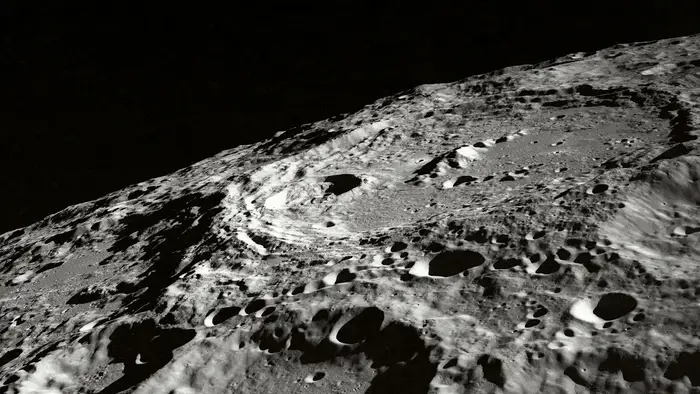
The faked-Moon-landing claim comes in many versions, but the core narrative is always the same. Sometime around July 1969, the argument goes, NASA — desperate to beat the Soviet Union to the Moon before the decade ran out, as President Kennedy had promised — realized it could not actually get people there and back. So it staged the whole thing. The astronauts were supposedly sealed in a simulator or flown partway up; the lunar surface scenes were filmed on a soundstage; the footage and photographs were clever fabrications; and the world was shown a movie and told it was history.
The modern theory’s popular origin is usually traced to 1976, when a writer named Bill Kaysing self-published a pamphlet questioning the landings. Kaysing had worked briefly at a rocket-engine company in the early 1960s and styled himself as an insider; his booklet, cobbled together with amateur photography analysis, argued that the probability of a successful crewed landing was vanishingly small and that the government had faked it. From that pamphlet grew an entire ecosystem: books, documentaries, and eventually a thriving internet subculture of “anomaly hunters” who pore over NASA’s public archive looking for inconsistencies.
What keeps the theory alive is not a single smoking gun but a bundle of supposed “anomalies” — details in the Apollo photographs and footage that believers say prove fakery. The greatest hits are remarkably stable across the decades: the American flag appears to wave even though the Moon has no air; the lunar sky shows no stars in any photograph; shadows fall at inconsistent angles, as if lit by studio lamps; there is no blast crater beneath the lunar module; and astronauts could never have survived the Van Allen radiation belts. Each sounds, on first hearing, like a reasonable question. Each turns out, on examination, to have a documented physical explanation — and to misunderstand something basic about the Moon, the cameras, or physics.
Before weighing those claims one by one, it is worth appreciating what the hoax theory has to explain away. It is not a single landing. Between 1969 and 1972, six crewed missions landed on the lunar surface, and the Apollo program returned 382 kilograms of lunar samples to Earth — material studied ever since in laboratories across the world. NASA’s public archive contains some 8,400 photographs and thousands of hours of footage and voice transcripts. The hoax story does not ask you to doubt one broadcast. It asks you to doubt the largest scientific and engineering program of the 20th century.
The Waving Flag
The most famous “anomaly” of all is the American flag that appears to flutter in footage from the lunar surface. The argument is simple and emotionally potent: the Moon has no atmosphere, so there is no wind, so a flag should hang limp. If the flag is waving, the reasoning goes, the scene must have been filmed in air — on a soundstage, with a breeze.
What the footage actually shows is not a flag waving in wind but a flag behaving exactly as it would in a vacuum. NASA’s engineers knew perfectly well that a standard flag would hang limp and invisible on the airless Moon, so the Apollo flags were fitted with a horizontal rod along the top edge to hold them extended. When Armstrong and Aldrin wrestled the telescoping flagpole into the lunar soil, they twisted and pushed it — and that handling set the fabric swinging. Here is the part that cuts against the conspiracy: on Earth, air resistance would have damped the swing almost immediately. On the Moon, with no air to slow it down, the flag kept oscillating much longer than intuition expects. The lingering motion that hoax believers read as “wind” is in fact what the absence of air looks like. Once the astronauts stopped touching the flag, the motion stopped.
The rippled look of the flag in still photographs has a similarly mundane explanation. The telescoping horizontal rod did not fully extend in every case, leaving wrinkles in the fabric that were frozen in place — they look like ripples of wind to a casual glance, but they are just folds in a stiff banner, held out by a rod that never quite straightened. Look at the entire archive, not just the famous frames, and the flag’s behavior is boringly consistent: it moves only when disturbed, exactly as a flag in a vacuum must.
The Starless Sky
The second pillar of the theory is the black, empty sky. In every famous Apollo photograph the heavens above the lunar surface are pitch black, with not a single star visible. If the astronauts were really standing on the Moon in the middle of space, skeptics ask, where are all the stars? A studio ceiling, they suggest, would be conveniently dark.
The answer is photography, not fakery. The astronauts were working on a brightly lit surface in direct sunlight, wearing white reflective suits, and their cameras — modified Hasselblads — were set to capture that scene: fast shutter speeds, small apertures, tuned for the glare of the lunar day. Those settings admit very little light, which is exactly what a bright subject needs and exactly what faint stars cannot survive. Stars are dim; the sunlit Moon is blinding. You cannot properly expose for both in the same shot, for the same reason a nighttime photograph taken under stadium floodlights shows no stars: the lights saturate the sensor and the stars drown in the glare.
The Apollo archive itself closes this case. On some missions the astronauts ran photographic experiments with long exposures, leaving the shutter open to capture dimmer phenomena — and those frames do show pinpoints of starlight, behind bright overexposed regions where the sunlit surface washed out the frame. The stars were always there; the cameras simply could not see them while correctly exposing the astronauts. Far from being suspicious, the starless photos are precisely what the physics of photography predicts.
The Shadows, the Crater, and the Radiation
The shadow argument is subtler. In several Apollo photographs, shadows appear to fall at angles that do not look parallel, or objects in shadow look brighter than they should. Believers claim this proves multiple artificial light sources — studio lamps — rather than the single distant Sun. The reality is that the lunar surface is not a flat studio floor. It is rolling, uneven terrain, and shadows cast across slopes and craters naturally appear to splay and shift direction. Add wide-angle camera lenses, which distort perspective at the frame’s edges, plus the fact that sunlit lunar soil reflects a surprising amount of light back into shadowed areas — the Moon’s regolith is highly reflective — and the “impossible” lighting becomes entirely predictable. Shadows that look wrong in a two-dimensional print look perfectly natural once the three-dimensional ground is accounted for.
Then there is the missing blast crater. The lunar module descended on a plume of rocket exhaust, yet photographs show no deep crater beneath it — surely a real landing would have gouged a hole? This expectation is built on an Earth-bound image of rocketry. The lunar module throttled down to a relatively low thrust for the final descent, and in the Moon’s one-sixth gravity the exhaust spread widely across the surface rather than digging straight down. The surface did not emerge untouched: photographs show a visibly scoured and swept area beneath the lander, where dust was blown outward — the famous “dust-free zone.” What did not happen is the deep excavation that a dramatic movie landing would suggest. The lander did exactly what the physics said it would do, not what the movies trained us to expect.
The Van Allen radiation belts get more airtime in conspiracy circles than anywhere else. The claim runs: two doughnut-shaped zones of trapped charged particles encircle Earth, the radiation there is lethal, and 1960s technology could not have carried humans through them and back. It sounds authoritative until you check the numbers. Apollo did not linger in the belts; the trajectories were plotted to punch through the thinnest sections quickly, and the spacecraft and spacesuits carried shielding. The total radiation dose the Apollo astronauts received was on the order of a standard medical X-ray or CT scan — measurable, planned for, and far below dangerous levels. The belts were a genuine engineering constraint, and the engineers engineered around them. Treating a navigated hazard as a physical impossibility confuses difficulty with impossibility.
The Reflectors That Still Answer
This is where the hoax theory meets the evidence it cannot digest. During Apollo 11, Armstrong and Aldrin deployed a small instrument on the lunar surface: the Lunar Laser Ranging Retroreflector Array, a panel of precisely angled glass prisms designed to bounce a laser beam fired from Earth straight back to its source. Apollo 14 and Apollo 15 left their own arrays. And here is the point that matters: those reflectors still work. Observatories on Earth fire lasers at them today and time the return pulse, measuring the Earth–Moon distance to centimeter precision. It is these very measurements that revealed the Moon is drifting away from Earth at about the rate a fingernail grows — a fact no one could know without a working instrument sitting on the lunar surface, waiting for photons from Texas and France.
Could the reflectors have been placed by robots? Conspiracy advocates sometimes retreat to this position, arguing that unmanned Soviet missions — Luna 17 and Lunokhod — carried their own reflectors, so reflectors prove nothing about astronauts. But this concedes the important part: something carried precision optical hardware to the Moon and aligned it with Earth in 1969, and continued returning signals for decades. The arrays were positioned by hand on the surface by named human beings, their deployment recorded on film and in mission transcripts. The independent, repeatable, ongoing success of lunar laser ranging is not a NASA press release — it is an experiment that any properly equipped observatory can perform tonight. The Moon answers back.
The Landing Sites, Photographed From Orbit
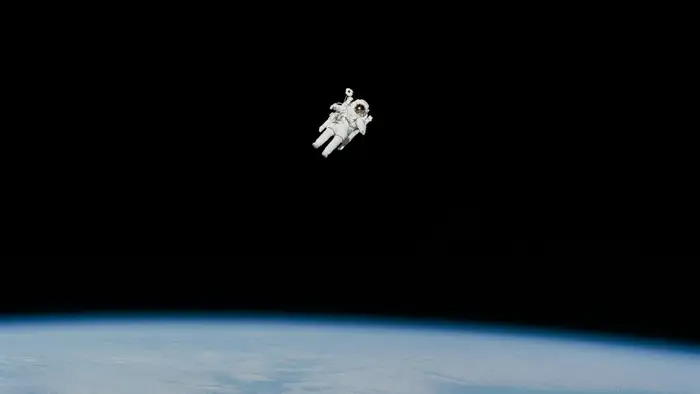
If reflectors are the hoax theory’s first immovable object, the Lunar Reconnaissance Orbiter is the second. Launched in 2009, NASA’s LRO carries cameras resolving down to about half a meter per pixel — sharp enough to pick out individual pieces of equipment on the surface. It has photographed all six Apollo landing sites, and the results are not ambiguous: the descent stages of the lunar modules sit exactly where the mission records say they were left. At the Apollo 11 site, the Eagle’s descent stage — the largest artifact Armstrong and Aldrin left behind after their 22-hour stay — is clearly visible. At the later sites, the images show the rovers’ wheel tracks and the astronauts’ footpaths preserved in the regolith, still crisp after more than five decades in airless stillness, where no wind or rain erases anything.
Crucially, these are not NASA-only observations. Japan’s SELENE orbiter (Kaguya) imaged the sites and produced a three-dimensional terrain reconstruction consistent with Apollo surface photographs. India’s Chandrayaan-2 orbiter photographed the Apollo 11 and 12 sites; South Korea’s Danuri probe imaged sites as well. Chinese officials have acknowledged Chang’e 2 imagery showing traces of earlier Apollo activity. Each nation’s images are consistent with the others — different spacecraft, different cameras, same equipment, same coordinates. Faking the original landings would now require believing that several rival space programs, decades later, independently cooperated to fake corroborating orbital photography. The skeptics’ counter-argument — that faking such photos would be easy — simply re-asserts the conspiracy at a larger, less plausible scale, dragging in governments that had nothing to gain and every reason to defect.
The Rocks, the Soviets, and the Impossible Secret
Consider the Moon rocks. The six landing missions brought home 382 kilograms of lunar material, and those rocks have been studied in laboratories around the world for over fifty years. They are not like Earth rocks: their chemistry, their isotopic composition, the microscopic impact craters pocking their surfaces, the glassy agglutinates formed in vacuum — the whole suite of features matches a body battered for billions of years without air or water. Independent scientists in dozens of countries have handled this material. It has underwritten major science, including support for the giant-impact theory of the Moon’s formation — the idea that the Moon condensed from debris thrown up when a Mars-sized body struck the early, mostly molten Earth. A forgery would require manufacturing, in 1969, hundreds of kilograms of geochemically consistent extraterrestrial material that would then fool every laboratory on the planet for half a century. Nobody has ever explained how, because there is no how.
Then there is the witness that hoax believers can least afford: the Soviet Union. During the Space Race, the USSR had every incentive — political, propagandistic, existential — to expose an American fraud. It had the capability, too: Soviet tracking stations monitored the Apollo missions’ radio signals, and Soviet publications at the time recorded Apollo 11 as an undisputed historic milestone. Moscow never claimed the landings were faked. Neither, in the decades since, has Russia, China, or any other rival. The silence of the one party that stood to gain the most from crying fraud is, in evidentiary terms, deafening.
Finally, there is the arithmetic of secrecy. The Apollo program employed roughly 400,000 engineers, technicians, scientists, contractors, and support staff. The hoax theory requires every one of them — the people who built the Saturn V, the people who tracked the spacecraft, the people who received the telemetry, the mission controllers who spoke to the crews — to have kept a perfect secret for more than fifty years, through resignations, retirements, deathbeds, whistleblower incentives, and the collapse of the very Cold War that supposedly motivated the lie. No large conspiracy in recorded history has held this long with this many participants. The theory does not merely ask you to distrust NASA. It asks you to believe in a miracle of human silence that has no precedent.
Why the Story Persists
None of this should be taken to mean the believers are foolish. The hoax theory endures because it is built from genuinely interesting questions. The flag does look strange if you have never seen fabric oscillate in a vacuum. The starless sky does look eerie if you do not know about exposure. The shadows do look odd if you flatten a bumpy world into a photograph. Each anomaly is a real puzzle with a real answer, and arriving at the answer requires trusting a piece of physics you cannot test in your backyard. Conspiracy content, meanwhile, is engineered to arrive first and explain simply: a soundstage is easier to picture than regolith reflectance.
The internet’s recommendation machinery has done the rest. People who engage with conspiracy content are reliably shown more of it, and each new video presents the same 1969-vintage “anomalies” as if they were fresh discoveries rather than claims debunked, in many cases, decades ago. The theory has also absorbed a modern upgrade: in an era of AI-generated imagery, it is easy to forget that in 1969 producing convincing footage of people in space simply was not possible — the special effects technology to fake the Apollo archive did not exist, a point astronomers like Dr Greg Brown of the Royal Observatory Greenwich have made when addressing the modern revival of the claims. The hoax theory asks us to believe that a government incapable of keeping small secrets staged the most complex forgery in history with effects technology that had not been invented.
The Verdict
ProofNews rates the claim that the Apollo Moon landings were faked as False.
Every “anomaly” cited by believers — the waving flag, the missing stars, the angled shadows, the absent blast crater, the radiation belts — has a documented physical explanation grounded in the realities of vacuum, photography, and lunar geology. Against those explanations stands a wall of independent evidence: retroreflector arrays placed on the surface that still return laser pulses today; orbital photographs from multiple nations showing the descent stages, rover tracks, and footpaths; 382 kilograms of lunar rock studied in laboratories worldwide; and the contemporaneous, silent corroboration of the Soviet Union, which tracked the missions and never disputed them. Six crewed landings between 1969 and 1972, hundreds of thousands of participants, and not one credible defector in fifty-seven years. The evidence does not merely fail to support the hoax theory — it contradicts it at every turn.
Fifty-seven years after Apollo 11, the footprints are still there. The Lunar Reconnaissance Orbiter can show them to you: the paths Armstrong and Aldrin walked, preserved in regolith that has not been disturbed since, because there is nothing on the Moon to disturb them — no wind, no water, no weather, only time. The mirrors they left behind are still catching laser light from Earth and throwing it back, a conversation between two worlds that has run uninterrupted since 1969. A conspiracy theory can survive bad evidence for a long time. What it cannot survive is the Moon itself, which keeps answering, night after night, exactly as the astronauts’ instruments said it would.