No, You Cannot See the Great Wall of China From the Moon
It is one of the most repeated “facts” in classrooms and trivia nights around the world: the Great Wall of China is the only human-made structure visible from the Moon with the naked eye. Generations of schoolchildren have memorized it. Travel brochures have printed it. And it is completely untrue.
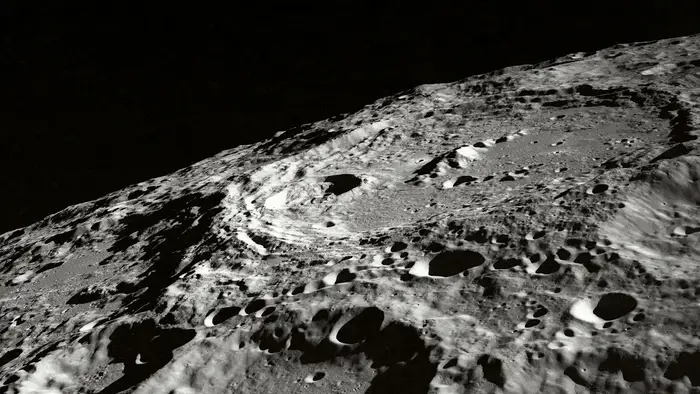
The version that has settled into popular culture is remarkably specific. The Wall, we are told, stretches so far and runs so boldly across the Chinese landscape that a person standing on the lunar surface — nearly four hundred thousand kilometres away — could look up and pick it out with nothing but their eyes. It is a thrilling idea, and it has survived almost a century, outliving the Space Age that should have killed it.
ProofNews went looking for the evidence: the claim’s origin, the testimony of the astronauts who actually went to the Moon, the position of NASA and space agencies, and the cold mathematics of human vision. Every line of evidence points the same way.
The Claim, As It Circulates
The claim appears in several flavors. The strongest — and the one under review here — says the Great Wall of China is visible from the Moon with the naked eye, and often adds that it is the only human-made object that can be. A weaker version holds that it is the only human structure visible from space at all, even from low orbit. Both are false, but the Moon version is the more decisive falsehood: it fails on physics alone, before any witness is even consulted.
It is worth separating these two versions from the start, because the weaker one has generated genuine debate. From a few hundred kilometres up, in low Earth orbit, the question of whether a sharp-eyed astronaut can make out the Wall under ideal conditions is a real and interesting argument. From the Moon, it is not an argument. It is settled.
Where the Myth Came From
Few people realize that the “visible from the Moon” legend predates human spaceflight by decades. The most widely documented origin point is a 1932 Ripley’s Believe It or Not! cartoon, which described the Wall as “the mightiest work of man, the only one that would be visible to the human eye from the moon.” No human being had left the atmosphere in 1932, let alone set foot on the Moon. The claim was a piece of popular entertainment — a marvel to print, not a measurement to verify.
Some popular accounts trace even earlier precursors, with one Chinese travel reference attributing a version of the idea to a 1754 letter by the British antiquarian William Stukeley, written more than two centuries before the first Moon landing. Whatever its earliest seed, the Ripley’s cartoon gave the myth its modern, mass-market form, and textbooks, documentaries, and dinner-table conversation carried it forward for the rest of the century.
That longevity matters. The claim embedded itself in school curricula around the world — including in China itself, where elementary school textbooks taught that an orbiting astronaut could see the Wall with the naked eye. By the time the Space Age arrived, the legend was so well established that returning astronauts were asked about it constantly, as if they were expected to confirm what the trivia books had already decided.
The Rockets Went Up — and the Legend Wobbled
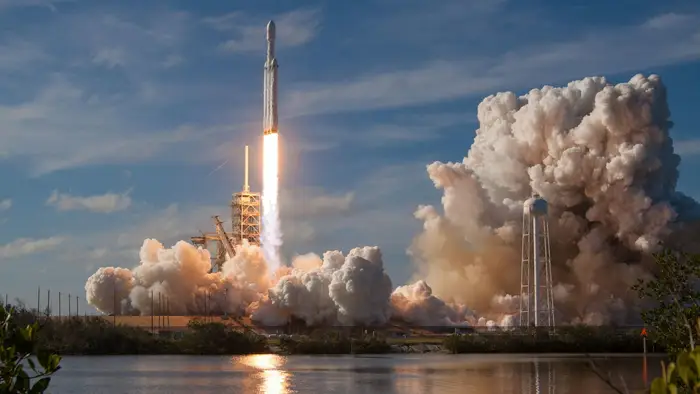
The myth’s great misfortune was that humanity eventually went to the Moon for real, and the people who went there kept being asked the same question. Their answers were remarkably consistent — and consistently disappointing for the legend.
Neil Armstrong, the first person to stand on the lunar surface in 1969, was questioned about the Wall for the rest of his life. According to an oral history held by NASA’s Johnson Space Center, Armstrong reported seeing continents, lakes, and patches of white against blue from the Moon — but no human-made structures of any kind. The Earth from the lunar surface was a beautiful, distant world. It was not a world on which a wall could be picked out.
He was not alone. Apollo 11 command module pilot Michael Collins, who orbited the Moon while Armstrong and Buzz Aldrin walked on it, wrote in his 1988 book Liftoff that the notion of the Wall being visible from the Moon was simply false. Apollo 8 and Apollo 13 astronaut Jim Lovell, who made careful observations of Earth from lunar distance, dismissed the idea outright, calling it absurd. Apollo 15 astronaut Jim Irwin said spotting the Wall from the Moon was out of the question. Apollo 12 lunar module pilot Alan Bean, who walked on the Moon in 1969, later said that from the lunar surface, “No man-made object is visible at this scale.”
Consider what that list represents: the men with the best possible vantage point in human history — standing on the Moon itself, looking back at Earth — unanimously reporting that no human construction of any kind was visible, let alone one specific wall.
China’s Own Astronaut Couldn’t See It — From Far Closer
The legend took its most embarrassing blow in 2003, and it came from the nation the Wall was built to celebrate. On October 15, 2003, Yang Liwei became China’s first person in space aboard the Shenzhou 5 spacecraft, orbiting Earth for about 21 hours. When he returned, reporters asked him the inevitable question. His answer, given on Chinese state television, was unambiguous: he had not seen the Great Wall from space.
This was no casual glance. Shenzhou 5 orbited at a few hundred kilometres above the surface — vastly closer to the Wall than the Moon, and a vantage from which the myth’s defenders might at least have hoped. Yang later explained that the scenery was beautiful, but the Wall was nowhere to be seen. One account of his remarks has him noting that once the spacecraft climbed beyond roughly thirty kilometres in altitude, the Wall was already beyond naked-eye detection.
The fallout in China was extraordinary and revealing. Until Yang’s flight, Chinese elementary school textbooks had taught the visibility claim as fact. After his return, the country’s Ministry of Education moved to have publishers revise or drop textbooks that perpetuated the myth — a telling sign of how deeply the legend had been institutionalized, and how seriously the correction was taken once a national hero had tested it.
If there were any patriotic incentive to confirm the legend, Yang Liwei had every reason to do so. That he reported the opposite is powerful testimony.
What NASA Says
NASA has addressed the claim directly, and its position leaves no room for the Moon version. The agency states that the Great Wall “generally isn’t” visible to the unaided eye even in low Earth orbit, and “certainly isn’t visible from the Moon.” The physical reason NASA gives is straightforward: the Wall was built from local stone, earth, and clay, so it tends to match the color and texture of the ground on either side of it. It is a long, low structure made of the very landscape it crosses.
The most famous piece of evidence NASA has published on this subject is also its most instructive. On November 24, 2004, Expedition 10 Commander Leroy Chiao photographed what NASA describes as apparently the first verifiable image of the Great Wall taken from low Earth orbit — from the International Space Station, about 348 kilometres up, using a 180-millimetre telephoto lens. The crucial detail, which NASA itself reports, is that Chiao said he could not see the Wall with his own eyes, and was not even certain the photograph contained it. The camera, with its magnifying lens, captured what the astronaut’s unaided vision could not confirm.
That is the shape of the whole debate in miniature: a telephoto lens and ideal conditions can record the Wall; the naked eye, even in orbit, generally cannot.
The Physics: Running the Numbers
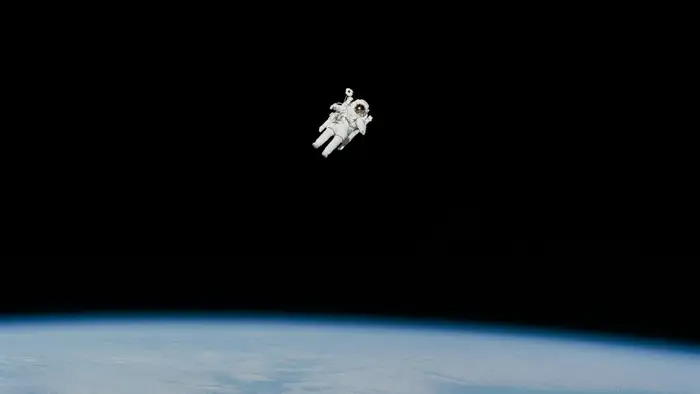
Eyewitness testimony settles the matter, but the optics make it doubly certain — and the math is worth doing, because it shows the claim was never plausible.
The Great Wall is extraordinarily long — its full network of branches and parallel walls, built across many dynasties, totals on the order of 21,000 kilometres. That length is what makes the myth feel intuitively right: surely something that long must be visible. But visibility is governed by width and contrast, not length. The Wall is typically only around six metres wide, snaking along ridgelines and across deserts in stone that blends into its surroundings.
The Moon sits, on average, about 384,400 kilometres from Earth. A six-metre-wide wall at that distance subtends an angle so small it is difficult to grasp intuitively. Worked out, it is roughly two ten-thousandths of an arcminute — while the healthy human eye, under ideal conditions, can resolve details no finer than about one arcminute. The Wall from the Moon is some five thousand times smaller than the smallest detail the naked eye can distinguish.
Put it in everyday terms: seeing the Great Wall from the Moon with the naked eye would be like spotting a single human hair from more than six kilometres away. It is not a matter of sharp eyesight or clear weather. It is a hard limit of human optics.
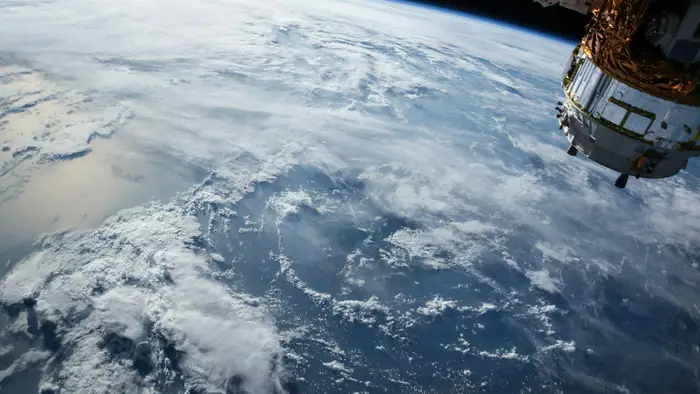
Even from the International Space Station, roughly 400 kilometres up, the calculation is unforgiving. At that altitude the Wall’s width spans only about a tenth of an arcminute — still roughly ten times below the eye’s resolution limit. As Scientific American has noted, the eye can sometimes cheat a little with very long, very narrow objects of high contrast against their background — astronauts do spot desert roads and the wakes of ships this way. But the Wall defeats that loophole too: it is built of stone and earth that barely contrast with the terrain, and it curves and winds with the landscape rather than cutting a straight, bright line across it. Width, contrast, and geometry all fail at once.
The Low-Earth-Orbit Nuance
This is where honest reporting requires a distinction, because the weaker version of the claim — visible from low orbit — has a more complicated history than a flat denial.
Some astronauts have reported catching the Wall, or something they believed to be the Wall, from orbit under exceptional conditions. Skylab astronaut William Pogue, who lived aboard the space station in 1973 and 1974 at an altitude of about 480 kilometres, wrote that he could make out the Wall — but only with binoculars. That is not naked-eye visibility; it is assisted vision, and it concedes the point.
Shuttle astronaut Jay Apt, who orbited Earth 562 times across four missions in the 1990s, went looking for it deliberately. Writing in National Geographic in 1996, he reported that despite being able to spot objects as small as airport runways, the Wall — built of materials nearly identical in color to the surrounding soil — remained “almost invisible from only 180 miles up.”
In 2018, ESA astronaut Alexander Gerst photographed the Wall from the space station’s cupola — but he used an 800-millimetre super-telephoto lens, a piece of glass with vastly more resolving power than any human eye.
There are narrow windows when detection becomes plausible: when the Sun sits low near sunrise or sunset, the Wall can cast a long shadow across the terrain, revealing its path even if the structure itself stays unresolved. And modern orbital photography, with telephoto lenses and careful timing, can certainly record it — as Chiao’s 2004 frame demonstrated. But as a rule of thumb, the evidence supports a simple test: if it takes a telephoto lens and perfect conditions to capture it, it is not “visible from space” in the way the myth means.
What Astronauts Can See From Orbit
One of the more ironic footnotes to this myth is that the Wall’s supposed uniqueness — the “only man-made object” framing — is false in both directions. Not only is the Wall hard to see; plenty of other human works are easier.
NASA has noted that cities at night, major highways, bridges, airports, dams, and reservoirs are all more prominent from orbit than the Wall. The agency has published space station photographs in which even the pyramids at Giza are clearly discernible. The Wall’s fame as a space landmark was always a category error: it confused historical grandeur with optical prominence. A desert highway — straight, pale, high-contrast against dark rock — beats a winding stone wall on its own terrain every time.
Why the Myth Refuses to Die
If the evidence is this one-sided, why does the claim still circulate? Part of the answer is that it flatters everyone involved. It flatters the Wall, elevating an already magnificent structure into a cosmic landmark. It flatters the teller, who gets to share a “mind-blowing fact.” And for decades it flattered a particular story about human achievement — that our works are so grand they can be seen from another world.
There is also a structural reason myths like this persist: they are rarely tested by the people who repeat them. A trivia host has no way to verify lunar visibility; an astronaut does, but astronauts are not usually in the room. The claim thrives in the gap between assertion and verification — which is precisely why it began to collapse the moment verification became possible. First the Moonwalkers denied it, then Yang Liwei denied it from orbit, then NASA published the physics and the photographs. Each layer of evidence arrived decades after the legend had already settled into textbooks.
The textbook angle deserves emphasis, because it shows how misinformation hardens into authority. Once a false claim enters a curriculum, it borrows the credibility of the entire educational system. Generations of students learn it not as rumor but as lesson — and when those students become teachers, the cycle renews. China’s decision to revise its textbooks after Yang Liwei’s flight was an unusually direct intervention in that cycle, and a model of how to break it: test the claim, report the result honestly, and correct the record at the source.
Finally, the myth survives on a persistent confusion between length and visibility — the intuition that a 21,000-kilometre structure must be seeable from anywhere. It is a good reminder that human intuition is a poor instrument for optics. The night sky is full of objects far larger than the Wall that remain invisible without telescopes, and the ground below a spacecraft is full of enormous features the eye slides right past. Bigness is not brightness, and length is not contrast.
The Verdict
False. The Great Wall of China is not visible from the Moon with the naked eye, and it never was.
The evidence converges from every direction. Apollo astronauts who stood on the Moon — Armstrong, Bean, Irwin — and those who orbited it — Collins, Lovell — unanimously reported that no human-made object of any kind was visible from lunar distance. NASA states directly that the Wall “certainly isn’t visible from the Moon.” China’s first astronaut, Yang Liwei, could not see it even from low Earth orbit, hundreds of kilometres closer, prompting his country’s education ministry to strip the claim from textbooks. And the optical physics is decisive on its own: a six-metre-wide wall at 384,400 kilometres subtends an angle thousands of times below the resolving power of the human eye — the equivalent of spotting a single hair from more than six kilometres away.
The narrower question — whether the Wall can be glimpsed with the naked eye from low Earth orbit — is the only part of this story with any legitimate debate, and even there the record is bleak for the myth: astronauts needed binoculars, telephoto lenses, or exceptional lighting to detect it, while other human structures like highways, cities, and dams show up far more readily. None of that rescues the Moon claim, which is the version under review here.
A legend born in a 1932 cartoon survived for nearly a century on the strength of a good story and a bad intuition about scale. It took moonwalkers, a taikonaut, and a little mathematics to finally lay it to rest. The Great Wall remains one of humanity’s supreme achievements — it simply is not visible from another world. And that is fine. Some wonders are meant to be walked, not spotted from the Moon.
Sources consulted for this fact-check include Scientific American’s reporting on the Wall’s visibility, NASA’s statements and the Leroy Chiao ISS photograph record, NASA Johnson Space Center oral histories, contemporary reporting on Yang Liwei’s 2003 Shenzhou 5 flight and China’s textbook revisions, and astronaut accounts from the Apollo era including Michael Collins’s Liftoff.