The Flu Shot Can't Give You the Flu — So Why Did You Feel Sick for Two Days?
It is one of the most repeated stories in American healthcare, and it surfaces every autumn like clockwork. Somebody rolls up a sleeve at a pharmacy clinic, feels rotten for two days, and tells the same story for years afterward: the flu shot gave me the flu. Never again.
The story is sincere. The person telling it really did feel miserable — the aches, the feverish chill, the sore arm — and the timing was hard to argue with. Shot on Tuesday, sick by Thursday. Case closed, or so it seems. And because the story is so common, it has hardened into something bigger: a full-blown claim, passed around break rooms, family group chats, and comment sections, that the flu vaccine can infect you with influenza. This month, as pharmacies begin stocking the season’s vaccines, health systems are once again publishing their annual myth-busting explainers. Ohio-based insurer Medical Mutual, in an August 2026 piece debunking common flu shot myths, listed the belief near the top of its list: the myth that a person might get the flu from the flu shot.
We looked into it — how flu vaccines are actually manufactured, what clinical trials found when they compared vaccinated people against people given salt water, what the weakened live nasal spray really is, and why your body sometimes feels briefly awful afterward. The answer is worth getting right, because the myth keeps people away from one of the most effective tools in preventive medicine. And the science, it turns out, is not ambiguous.
The Claim
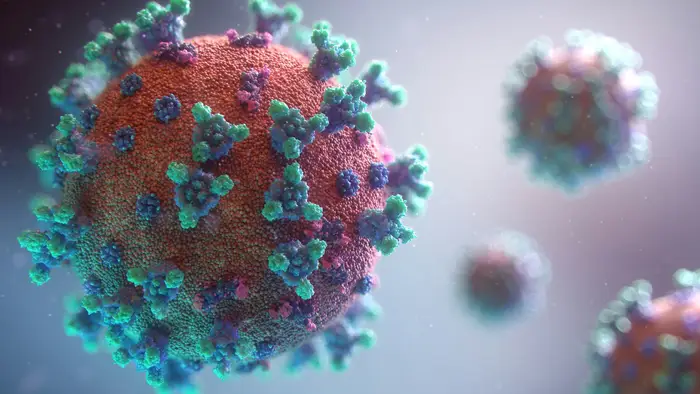
In its strongest form, the claim is simple and physical: the flu shot contains flu virus, so injecting it can give you the flu. People who make the claim are usually not talking about microchips or conspiracies — they are talking about personal experience. They got the shot, they got sick, the connection seems obvious, and no amount of “correlation isn’t causation” quite lands when you were the one shivering on the couch.
There is a softer version of the claim that shows up too: not that the shot infects you on purpose, but that it is somehow too close to the real thing, that a “mild case” can slip through, or that the nasal spray version — which does contain live virus — can seed an actual infection. These variants deserve their own answers, because the vaccines are not all built the same way. So let us start with what is actually in the needle.
What Is Actually in the Needle
The standard flu shot given with a needle contains inactivated influenza virus — inactivated meaning killed. According to the U.S. Centers for Disease Control and Prevention, flu vaccine manufacturers kill the viruses used in the shot during the manufacturing process, and batches of vaccine are tested to make sure they are safe. The agency’s answer to the direct question is blunt: “No, a flu shot cannot cause flu illness.”
This is not a hand-waving assurance. It is a statement about basic virology. A killed virus cannot replicate. Infection is, at its core, replication — a virus entering cells, hijacking their machinery, and manufacturing copies of itself until the immune system either wins or is overwhelmed. Take away the ability to replicate and you have removed the entire mechanism of infection. What remains is a collection of viral parts — the proteins and shapes the immune system needs to learn — presented in a form that cannot start the process the vaccine is designed to prevent.
There is also a second kind of injectable flu vaccine that removes even that last theoretical trace of doubt. Recombinant flu vaccines do not use whole virus at all, killed or otherwise. They are manufactured using influenza antigens — specific viral proteins — rather than a complete virus, so there is simply no infectious agent present in the vial. You cannot be infected by something that was never an infectious particle to begin with.
The evidence does not rest on theory alone. In the 1990s, researchers ran the experiment that settles “I felt sick, therefore the shot made me sick” — randomized, blinded trials in which some healthy working adults got flu shots and others got saltwater injections, with neither the recipients nor the evaluators knowing who got what. Two of the best-known studies, published by Carolyn Bridges and colleagues in JAMA in 2000 and by Kristin Nichol and colleagues in the New England Journal of Medicine in 1995, compared symptoms across the two groups. The only differences they found were increased soreness in the arm and redness at the injection site among people who received the real flu shot. There were no differences in body aches, fever, cough, runny nose, or sore throat. If the vaccine were causing even mild flu-like illness, those symptoms should have clustered in the vaccinated group. They did not.
This is why public-health agencies are willing to state the point so categorically. The CDC’s vaccine safety page states that “flu vaccines cannot cause flu,” and explains that the vaccines either contain inactivated virus that is no longer infectious or a particle designed to look like an influenza virus to the immune system. Over the past five decades, hundreds of millions of Americans have safely received flu vaccines, backed by extensive safety research. The record is not the story of a product that occasionally infects its recipients.

The Nasal Spray: A Live Virus That Cannot Give You the Flu
The nasal spray vaccine, often known as FluMist, is the exception people reach for when they learn the shot contains killed virus — because the spray really does contain live influenza virus. This is where the claim sounds most plausible, and where it still fails.
The viruses in the nasal spray are live attenuated and cold-adapted. Attenuated means weakened; cold-adapted means they are engineered to thrive only at the cooler temperatures of the nose and upper airway. The CDC explains the key consequence plainly: the viruses cannot reproduce in the lungs or other areas where warmer temperatures exist. Influenza, the disease, is an infection of the lower respiratory tract — the lungs. A virus that physically cannot replicate there cannot cause the disease. As the CDC puts it, the viruses in the nasal spray vaccine are weakened and do not cause flu illness.
That is not to say the spray is side-effect free or interchangeable with the shot. It can cause runny nose, headache, sore throat, and cough in adults, and runny nose, wheezing, headache, vomiting, muscle aches, and low-grade fever in children — symptoms that begin soon after vaccination and are typically mild and short-lived. And it comes with eligibility restrictions that the shot does not: pregnancy, immune status, and certain medical conditions affect whether it is the right choice, which is a conversation to have with a clinician. But those restrictions are about caution with a live vaccine product, not evidence that the product can cause influenza. Used as directed in eligible people, the spray does not give you the flu either.
Why You Felt Sick Anyway
If the vaccine cannot cause flu, then what happened to the person shivering on the couch two days after the shot? Their experience deserves a real answer, because dismissing it is how myths harden into identity.
The most common answer is the simplest: a brief, mild reaction to the vaccine itself, and it is not an infection. The CDC lists the common side effects of the flu shot as soreness, redness, and swelling where the shot was given, plus headache, fever, muscle aches, nausea, and fatigue. The agency notes that these reactions are generally mild and go away on their own within a few days — considerably less severe, as one medical explainer summarized the CDC’s position, than the symptoms of actual flu illness.
Here is the part that trips people up: the soreness at the injection site is not a sign that something went wrong. It is, in a very real sense, a sign that the vaccine is doing its job. The CDC explains that the soreness is often caused by the immune system making protective antibodies to the killed viruses in the vaccine — the very antibodies that will later fight the real virus. The Advisory Committee on Immunization Practices notes that rare symptoms include fever, muscle pain, and feelings of discomfort or weakness, which begin soon after the shot and usually last one to two days. In other words, when you feel briefly achy after vaccination, you are feeling your immune system learn. That is the product working, not the product infecting you.
There is also a psychological layer that researchers have documented. When you expect to feel bad after a shot — because your cousin swore she felt awful, because the internet said so — you pay closer attention to every twinge in your body, and ordinary twinges get reclassified as vaccine injury. Medical writers who cover this myth point out that this is normal human psychology, not a character flaw. A sore shoulder from sleeping wrong, a headache from dehydration, the ordinary background noise of being alive — all of it gets swept up and filed under “the shot did this.” The expectation shapes the experience, and the experience gets told and retold until it becomes family lore.
Medical Mutual’s August 2026 debunker captured the dynamic exactly: some people believe they contracted the flu because the vaccine’s common side effects can mirror flu-like symptoms — low-grade fever, headache, muscle aches, soreness and redness around the injection site — and these reactions are a normal immune-system response that lasts one to two days. The symptoms are real. The interpretation is wrong.

The Two-Week Gap and the Coincidence Trap
Even accounting for mild side effects, many people’s stories describe something that sounds like genuine, full-strength flu — fever, chills, a week in bed — arriving days after vaccination. If the shot cannot infect anyone, how do those stories happen? Public-health agencies and physicians point to four explanations, none of which involve the vaccine containing infectious virus.
The first is the two-week gap. Protection from the flu vaccine does not switch on the moment the needle leaves your arm. As Scripps Health’s myth-busting guide explains, quoting family medicine physician Dr. Cynthia Wilson, “It takes about two weeks after vaccination for antibodies to develop in the body and provide protection against influenza.” Anyone exposed to influenza during that window — infected the week before the shot, or at the pharmacy on the way home — will get the flu exactly as if they had never been vaccinated, because immunologically, they had not been yet. The timing makes the shot look guilty, but the exposure beat the antibodies.
The second is that the vaccine only protects against influenza, while “the flu” in everyday language covers a whole cast of impostors. Rhinoviruses, respiratory syncytial virus (RSV), SARS-CoV-2, and dozens of other respiratory viruses circulate during the same months as influenza, and several of them produce fever, aches, and fatigue that people reasonably call the flu. Catch one of those around your vaccination appointment and the story writes itself: shot, then sickness. The vaccine was never designed to stop those viruses, so its failure to do so proves nothing about what it contains.
The third is the hardest one for believers to accept, because it is true: flu vaccines are imperfect. They reduce risk; they do not eliminate it. During the 2024–2025 season, CDC surveillance networks estimated that the vaccine reduced the chance of a doctor’s visit for flu by 36 to 54 percent in adults, and of hospitalization by 41 to 55 percent. Interim estimates for the 2025–2026 season put protection at 35 percent against emergency and urgent care visits and 27 percent against hospitalization. Those numbers mean that in a bad season, a meaningful fraction of vaccinated people can still catch influenza from a circulating virus. That is a breakthrough infection — the vaccine lowering your odds but the dice landing badly — not evidence that the syringe contained infectious flu. And the evidence consistently shows that vaccinated people who do get infected tend to get milder cases.
The fourth is the sheer background rate of winter illness. Flu season is also cold season, and the two love to overlap. When millions of people get vaccinated at exactly the time of year when respiratory viruses are surging, some of them were always going to get sick within days of their appointment by pure coincidence. Timing alone cannot establish cause, and coincidence does not need a conspiracy — it just needs a calendar.
Scale helps put all of this in perspective. The CDC estimated that during the 2024–2025 season, flu caused 51 million illnesses, 710,000 hospitalizations, and 45,000 deaths in the United States — and that vaccination prevented about 10 million illnesses, 180,000 hospitalizations, and 12,000 deaths. A tool that prevented ten million illnesses is not secretly causing them.

What the Health Agencies Actually Say
With flu season approaching, the guidance from public-health authorities is consistent and long-standing. The CDC recommends that nearly everyone six months and older get a flu vaccine every year, with rare exceptions, ideally in September or October and by the end of October — though vaccination remains worthwhile as long as flu viruses are circulating. The recommendation is especially emphatic for people at higher risk of serious complications: adults 65 and older, children younger than five, pregnant people, and those with certain chronic health conditions or weakened immune systems.
An honest fact-check should also name the real, rare risks, because pretending vaccines carry none is its own kind of misinformation. Some studies have found a possible small association between the injectable flu vaccine and Guillain-Barré syndrome, a rare neurological condition — the CDC estimates the risk at fewer than one or two cases per one million people vaccinated, and other studies have found no association at all. What is often left out of the scary version of this fact is the comparison that matters: Guillain-Barré syndrome also, rarely, occurs after actual flu illness, and it is more common following flu illness than following flu vaccination. Skipping the vaccine to avoid a one-in-a-million risk while accepting the far larger risk of the disease itself is not the trade it appears to be. Severe allergic reactions are also possible but rare; difficulty breathing or swelling of the face or throat after any vaccination requires emergency care.
None of these caveats move the needle on the central claim. They are the standard profile of a medical product used hundreds of millions of times over five decades — a product whose safety record the CDC describes as supported by extensive research. The claim under review is not “the flu vaccine has zero side effects.” It is “the flu vaccine can give you the flu.” And on that question, the agencies, the trial data, and the virology all say the same thing.
The Verdict
Verdict: False.
The flu shot cannot give you influenza. The injectable vaccine contains killed virus that is biologically incapable of replicating and causing infection, a fact confirmed by randomized, blinded trials in which vaccinated people reported no more flu-like symptoms than people injected with salt water. The nasal spray’s live viruses are weakened and cold-adapted so they cannot reproduce in the lungs, and the CDC confirms they do not cause flu illness.
Every part of the myth has a better explanation. The sore arm and the day of aches are your immune system building its defenses — a reaction, not an infection. Illness in the days after vaccination most often traces to exposure before antibodies developed, which takes about two weeks; to one of the many non-influenza viruses people casually call “the flu”; or to a breakthrough infection that a partially effective vaccine could not block. None of those means the syringe contained infectious influenza. It did not, because it cannot.
So the next time someone tells you the shot gave them the flu, you can believe their story and correct their conclusion at the same time. They really did feel awful — and the flu, when it finally came for them or their neighbors, was exactly the thing the vaccine was trying to prevent. Getting the shot did not cause their illness. Skipping it next year only raises the odds of a worse one.