The Five-Second Rule Is a Myth — Bacteria Don't Wait for a Countdown
It happens in a heartbeat. The cookie slips off the desk, the sandwich slides out of its wrapper, a chip arcs through the air in a kitchen mishap. And before the food even lands, someone in the room announces the plan: five-second rule. Snatch it up quickly, blow on it for luck, and it is as if the floor never happened.
The ritual is so familiar that it feels like folk wisdom passed down through generations, and in a sense it is. But this month’s question at ProofNews is the uncomfortable one: is there any science behind the five-second rule at all? Can germs really be trusted to hold off for a few seconds while you rescue your lunch? And what does “safe” even mean when the food in question has touched a surface that looked clean?
To answer it, we went to the laboratories where researchers have spent two decades dropping food on purpose. Food scientists at Clemson University grew salmonella on kitchen surfaces and timed exactly how fast it moved onto bologna. A high school student in Illinois turned the question into an Ig Nobel Prize-winning experiment. Researchers at Aston University in England surveyed hundreds of people about their floor-eating habits and then measured bacterial transfer in the lab. And a team at Rutgers University ran the most exhaustive version of the experiment ever attempted: thousands of precisely timed food drops, with four foods, four surfaces, and contact times measured in fractions of a second. Their results converge on an answer that the five-second rule cannot survive. The rule, in the form most people believe it — that food rescued within five seconds is safe to eat — is false. Bacteria do not watch the clock.
The Claim
In its everyday form, the five-second rule claims that food dropped on the floor is still safe to eat provided you pick it up within five seconds. The unspoken theory is that bacteria need a little time to migrate — that contamination is a slow process, and a fast hand can beat it. Some people grant themselves three seconds, others ten, but the core belief is identical: there is a grace period, a window of safety, during which the floor and the food have not yet made their microbial introduction.
A softer version of the claim sometimes appears in conversation: that the rule is not really about absolute safety, but about acceptable risk — that five seconds is a reasonable compromise between hygiene and waste, and that the amount of bacteria transferred in such a short time is too small to matter. This version deserves attention, because it smuggles in a different question: not whether bacteria transfer at all, but whether enough of them transfer to make you sick. As we will see, the science answers both questions, and the answers are not comforting for the floor-snacking faithful.
The claim is also specific in a way that matters. It promises a threshold — a line in the sand. Below five seconds, safe; above five seconds, contaminated. Thresholds like this are what make the rule testable in a laboratory. If scientists find contamination at one second, the threshold collapses. And that, to spoil the ending slightly, is exactly what they found.
Where Did the Rule Come From?
Nobody knows precisely when the five-second rule entered human culture, and that uncertainty is part of its charm. The most colorful origin story, recounted in food microbiologist Paul Dawson’s book “Did You Just Eat That?” — co-written with Brian Sheldon — reaches back to the 13th century and Genghis Khan. As the story goes, during a banquet, food was dropped on the ground, and the Mongol ruler declared that he would decide how long food could stay on the ground and still be eaten. Some versions of the legend give the khan a generous half-day rather than five seconds, which suggests the modern countdown may be a much later contraction of the idea. No one has produced a document proving the banquet happened, but the tale captures something real: the rule feels ancient because the habit is ancient. People have been rescuing dropped food for as long as there has been dropped food.
The modern version got a significant boost from an unexpected source: Julia Child. Fans of her television show “The French Chef” insist they watched Child drop a piece of lamb — or a chicken, or a turkey, depending on who is telling the story — onto the floor, pick it up, and tell viewers that if they were alone in the kitchen, nobody would ever know. Popular Science investigated the anecdote and found it was misremembered in almost every detail. What actually happened was that a potato pancake fell onto the stovetop, not the floor; Child returned it to the pan, adding, “But you can always pick it up and if you are alone in the kitchen, who is going to see?” A television stovetop in the middle of a demonstration is a long way from a restaurant floor, but the mangled version of the story gave the five-second rule something it had never had before: a celebrity endorsement.
How widespread is the belief today? A 2003 survey of food-handling habits found that 70 percent of women and 56 percent of men were familiar with the five-second rule, and that women were more likely than men to actually eat food that had been dropped. More than a decade later, the British numbers looked even more enthusiastic: researchers at Aston University found that 87 percent of people surveyed said they would or had eaten food dropped on the floor, and that 81 percent of the women in that group would apply the five-second rule. Whatever the science would eventually say, the custom was firmly embedded — a piece of household law observed in kitchens, offices, and dorm rooms around the world.
It even got the television treatment. The Discovery Channel show MythBusters took on the five-second rule after receiving hundreds of viewer requests, dropping food on various surfaces and incubating the samples. Their finding was that bacteria live on every surface in every home, in low levels that are mostly harmless but can be nasty in quantity — and that drier foods picked up less contamination than moist ones. The show’s verdict was a polite demurrer: the myth, such as it was, could not be confirmed.
But television demonstrations are entertainment. The serious work was happening in university laboratories, and it was considerably less forgiving.
The First Laboratory Tests
The earliest published research on the five-second rule came from an unlikely source: a high school student. Jillian Clarke, participating in a research apprenticeship at the University of Illinois, designed a standardized experiment — inoculating floor tiles with bacteria and then placing foods like gummy bears and cookies on them for varying lengths of time. Her work won the 2004 Ig Nobel Prize in Public Health, the annual honor for research that makes people laugh and then makes them think. Her experiment ran into a problem that says a lot about real-world floors: her first attempts did not find enough bacteria on the test floors for a valid test, so she was forced to grow bacterial colonies on them before dropping the food. The results cut both ways — they disproved the five-second rule, and they also demonstrated that the test floor, at least, was surprisingly clean.
The more famous early study came from Clemson University, where food science professor Paul Dawson and his team set out to test the rule with one of the most common causes of food poisoning: Salmonella Typhimurium. Published in the Journal of Applied Microbiology, the study ran three experiments. First, the researchers measured how long salmonella could survive on dry surfaces — wood, tile, and carpet — and found that the bacteria could persist for up to four weeks, in populations high enough to be transferred to food. That finding alone was sobering: a floor does not need to be visibly dirty to be a reservoir of bacteria. Then came the drops. Bologna and bread were placed on contaminated tile, wood, and carpet for five, thirty, and sixty seconds. The result: high levels of salmonella on both the moist bologna and the dry bread, regardless of the contact time. In the most dramatic single figure to come out of the study, more than 99 percent of the bacterial cells on a tile surface transferred to bologna within five seconds of contact.
The team’s conclusion was plain: salmonella can be transferred to food almost immediately upon contact, and the cleanliness of the floor matters far more than the speed of the rescue. If the food lands on a germ-ridden surface, it picks up germs — five seconds, thirty seconds, or sixty. There is no timer that saves it.
The British Study: Time Matters, but Not How You Hope
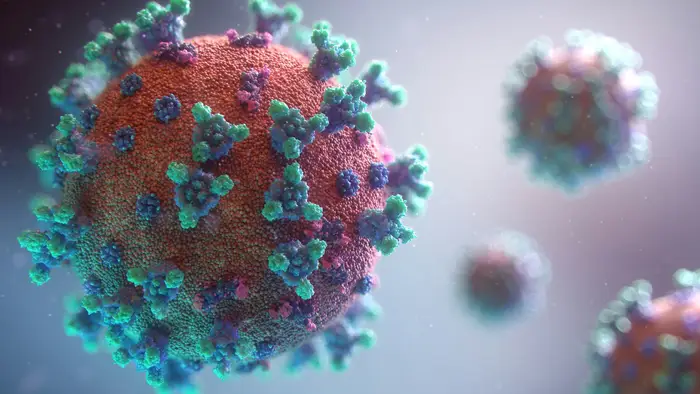
In 2014, the five-second rule got a rare moment of scientific optimism. Researchers at Aston University in England, led by microbiology professor Anthony Hilton with a team of biology students, monitored the transfer of common bacteria — including E. coli and Staphylococcus aureus — from indoor floor surfaces to dropped food. The food sat on carpet, laminate, and tile for between three and thirty seconds. The results showed that time was a significant factor in bacterial transfer: the longer the food stayed down, the more bacteria it picked up. Bacteria were least likely to transfer from carpeted surfaces and most likely from laminate or tile. In some of their tests, transfer seemed to require about five seconds of contact to occur at all.
This was the closest the five-second rule ever came to scientific vindication, and it is worth understanding exactly what it did and did not prove. The Aston team showed that less time means less transfer — a shorter drop is better than a longer one. But they did not show that a short drop is safe. Hilton himself warned against drawing that conclusion, saying: “Consuming food dropped on the floor still carries an infection risk as it very much depends on which bacteria are present on the floor and the type of floor.” In other words, the direction of the effect is real — speed helps — but there is no safe harbor on the timeline. And the study’s survey results were arguably its most important contribution: by documenting that the overwhelming majority of people eat dropped food, it showed how many daily decisions hang on a belief that was, at that point, still largely untested.
The Definitive Study: 2,560 Food Drops
The experiment that settled the matter arrived in 2016, when Rutgers University food microbiologist Donald Schaffner and graduate student Robyn Miranda published their findings in the journal Applied and Environmental Microbiology. Their study was the most comprehensive test of the five-second rule ever conducted, and its design explains why.
They tested four foods — cut watermelon, bread, buttered bread, and strawberry gummy candy — chosen to span the range from very moist to nearly dry. They tested four surfaces — stainless steel, ceramic tile, wood, and carpet — inoculated with Enterobacter aerogenes, a harmless bacterium that is a close cousin of salmonella and occurs naturally in the human digestive system, making it a safe stand-in for the pathogens the researchers were modeling. And they tested four contact times: less than one second, five seconds, thirty seconds, and three hundred seconds. Every one of the 128 possible combinations of food, surface, and time was replicated twenty times, yielding 2,560 individual measurements.
The findings were unambiguous on the central question. Bacterial transfer began in less than one second. Not a single dropped-food sample in the entire study came back bacteria-free. The five-second mark, the fulcrum of the whole folk rule, turned out to be microbiologically meaningless: food picked up within five seconds was contaminated, just as food picked up within one second was contaminated.
But the study also revealed why the rule feels plausible, and where its small grain of truth lies. Three variables mattered enormously. First, moisture: the wettest food, watermelon, picked up the most bacteria across every surface, while the gummy candy picked up the least. Water is the highway that bacteria travel on. Second, surface: tile and stainless steel transferred the most bacteria, while carpet transferred the least — its texture reduces the actual contact between food and surface, though Schaffner was careful to note that carpet is less risky, not safe. Third, time: longer contact consistently produced more transfer. In that narrow sense, the researchers wrote, the five-second rule is “real” — a shorter drop means fewer bacteria. But as Schaffner summarized it: “The five-second rule is a significant oversimplification of what actually happens when bacteria transfer from a surface to food.”
That sentence is the heart of the whole story. Bacteria do not wait politely for a countdown to expire. They begin moving the instant food touches a contaminated surface. What happens after that is a question of degree — how much moisture the food offers, how much bacteria the surface holds, and how long the two stay in contact — but degree is not the same as safety, and no combination tested produced a clean sample.

The Three Things That Actually Decide
If five seconds is not the threshold, what is? The research points to three factors that genuinely determine how contaminated your dropped food becomes — and none of them is a countdown.
The first is moisture, and it is the dominant one. Every study that tested wet versus dry foods found the same pattern. In the Rutgers experiments, watermelon — the wettest food tested — drew the highest bacterial transfer on every surface. In the Clemson work, moist bologna picked up dramatically more salmonella than dry bread. The MythBusters demonstration reached the same conclusion in miniature: dry foods pick up less. The mechanism is simple. Bacteria need a liquid film to move from a surface onto food; a wet food provides that bridge instantly, while a dry one does not. This is why the folk wisdom that “dry food is fine” carries more truth than the five-second rule ever did — a dry cracker snatched from a floor really does pick up fewer bacteria than a slice of watermelon. But fewer is not zero. The Rutgers team found measurable transfer to every food they tested, including the dry ones, in under a second.
The second factor is the surface. Hard, smooth surfaces — tile, stainless steel, laminate — transfer bacteria most efficiently, because they present a large, flat area of contact with the food. Carpet transfers the least, because its fibers hold food off the surface and reduce direct contact. Wood falls somewhere in between, and its transfer rates are more variable. This is the finding that most upends intuition: the carpet that feels filthy is, from a bacterial-transfer standpoint, kinder to your food than the gleaming tile that looks sanitary. Looks deceive twice over, because a surface’s visual cleanliness has almost no relationship to its bacterial load. The Clemson researchers found salmonella persisting for weeks on dry surfaces in numbers high enough to contaminate food. You cannot see bacteria, and “it looked clean” is not a measurement.
The third factor is time — and this is where the rule’s grain of truth lives. Every major study found that longer contact produces more transfer. Thirty seconds is worse than five, five minutes is worse than thirty seconds. In that limited sense, moving fast is better than moving slowly, and the Aston University researchers were right that time is a significant factor. The problem is that the curve does not start at zero. Contamination begins at contact — in under a second in the Rutgers data, essentially immediately in the Clemson data. The five-second mark is not a cliff edge between clean and dirty; it is just a point on a slope that begins at the very first instant. A rule that says “safe before five seconds, unsafe after” misdescribes that slope entirely.
The University of Alabama at Birmingham’s microbiology department put the point in the starkest terms when it published its own explainer on the question. “Bacteria can transfer to food the moment it touches a surface,” said associate professor Jessica Scoffield. “Moisture significantly increases this transfer, and the type of surface and food also influence how quickly it happens.” The department’s advice: the more contaminated the surface, the higher the likelihood of transfer — and since floors are exposed to shoes, dust, pets, and luggage, the wise move is to discard the food.
Why the Rule Refuses to Die
If the science is so one-sided, why does the five-second rule remain one of the most universally observed household laws on the planet? Part of the answer is that eating dropped food usually ends fine — and people mistake a usually-harmless habit for a safe one.
This is the logic of dose and luck. A dry cracker dropped on a recently cleaned kitchen floor picks up a small number of bacteria, and a healthy adult’s immune system dispatches them without incident. The person experiences no consequences, and the rule is confirmed in their mind. What they cannot see is that the experiment was uncontrolled: the floor happened to be relatively clean, the food happened to be dry, the bacteria present happened to be benign. Change any of those variables — a wetter food, a public restroom floor, a surface carrying salmonella — and the same five seconds deliver a very different dose. The rule takes credit for the lucky outcomes and ignores the variables.
There is also a powerful social and economic pull. Food feels wasteful to discard — the Genghis Khan legend, true or not, captured the ancient sense that good food should not be thrown away over a little dirt. The five-second rule converts a guilty choice into a principled one: you are not eating floor food, you are applying a rule. It gives the rescuer a script and the bystanders a joke. Rituals that solve an emotional problem are far stickier than facts, which is why laboratory papers, however definitive, have barely dented a practice that surveys keep finding in 80 to 90 percent of respondents.
And then there is the illusion of control. Five seconds feels actionable. It turns an invisible, uncertain risk into a game with a timer — and games with timers feel fair. The research replaces that satisfying countdown with something much less comfortable: a set of probabilities you cannot see, governed by moisture, surface, and bacterial load. People prefer the rule they can follow to the science they cannot observe.

What the Risk Actually Is
None of this means that every dropped cookie is a medical emergency. It means that “within five seconds” is not a meaningful measure of safety, and that the actual risk depends on what is on the floor and what fell on it.
To put the stakes in perspective: the U.S. Centers for Disease Control and Prevention estimates that roughly 48 million Americans — about one in six — get sick from foodborne illness each year, leading to an estimated 128,000 hospitalizations and 3,000 deaths. The leading culprit is norovirus, responsible for around 58 percent of cases; salmonella causes about 1.35 million infections, 26,500 hospitalizations, and 420 deaths annually in the United States. These are the same organisms that laboratory studies have shown transfer to dropped food in seconds: salmonella on tile, E. coli and Staphylococcus aureus on household floors. The pathogens in question are not theoretical.
The risk is also unevenly distributed. For a healthy adult, a small dose of bacteria from a home floor usually amounts to nothing. For the very young, the elderly, pregnant women, and people with weakened immune systems, the same dose can turn into a serious infection. This is the context in which the five-second rule is most dangerous — not as a kitchen joke among healthy adults, but as a guideline applied to children, where a parent’s instinct is to rescue the dropped pacifier or the fallen snack. The bacteria do not adjust their transfer rate for the age of the eater.
There is a related question that the research answers with equal clarity: does it help to blow on the food, wipe it off, or rinse it? Blowing on food adds bacteria from your own mouth rather than removing them. Wiping can remove visible dirt but does not sterilize the surface of the food; the Rutgers data shows bacteria adhering to food surfaces on contact, and mechanical wiping does not reliably dislodge them. Rinsing under water can reduce the bacterial load on some firm foods, but it also re-wets the food — the very condition that favors transfer — and it does nothing for porous foods like bread that have absorbed contamination into their structure. None of these folk remedies restores the food to its pre-drop state.
The Verdict
The claim that food picked up within five seconds is safe to eat is false. It is false because bacterial transfer does not begin at five seconds, or at three seconds, or at one second — it begins on contact. The most exhaustive study ever conducted on the question, with 2,560 precisely timed measurements, found that no dropped food sample came away bacteria-free, even at contact times of less than one second. The Clemson experiments found more than 99 percent of surface bacteria transferring to food within five seconds. The Aston University work showed that speed reduces the amount of transfer but offers no safe window. The University of Alabama at Birmingham put it most simply: bacteria can transfer the moment food touches a surface.
The honest version of the rule, the one the science supports, would go something like this: the less time food spends on a contaminated surface, the fewer bacteria it picks up — and the cleaner, drier, and harder the variables, the smaller the dose. That is accurate, and it is also useless as folk wisdom, because it contains no threshold, no countdown, and no promise. It says: risk is a slope, not a cliff. It says: a dry cracker on your own clean kitchen floor is a small risk, and a wet slice of fruit on a food-court floor is a large one, and five seconds distinguishes neither. What the five-second rule gets right — that speed matters at the margins — is dwarfed by what it gets wrong: the idea that any number of seconds makes dropped food safe.
So the next time the sandwich slides off the desk and the room reaches for its favorite ritual, consider the microbes’ perspective. They have no concept of five seconds. They do not need one.