Does Alcohol Kill Brain Cells? What Neuroscience Actually Found
It is the scolding everyone has heard at least once. Somebody orders a third round, and somebody else — a parent, a friend, a well-meaning stranger — delivers the line with total confidence: “You know every drink kills brain cells, right? And they never grow back.”
Sometimes it comes with numbers attached, which makes it sound even more scientific. Three beers kill ten thousand brain cells. A night of heavy drinking wipes out a million. The figures vary; the certainty never does. The claim has the polished feel of settled science, repeated in classrooms, printed on temperance posters, forwarded in chain emails, and stated as fact in countless online arguments about drinking.
There is only one problem with it. When scientists actually tested it — when they opened up brains, counted the neurons one by one, and compared lifelong heavy drinkers against people who barely drank — the cell-killing simply was not there. The neurons were still there. All of them.
That does not mean alcohol is harmless to the brain. Far from it. Heavy drinking genuinely damages the brain in ways that are serious, measurable, and in some cases permanent. But the damage looks nothing like the myth. Understanding the difference matters, because the myth gives drinkers a false picture of both the risk and the recovery — and false pictures make for bad decisions.
The Claim
Stated plainly, the claim goes like this: drinking alcohol kills brain cells (neurons), permanently and irreversibly. Because you are born with a fixed supply of neurons that cannot be replaced, every drink permanently reduces your brainpower. Drink enough, and you are measurably, permanently dumber.
The claim has a few supporting pillars that make it feel plausible. First, everyone knows that pure alcohol kills cells — it is why ethanol is an effective antiseptic and disinfectant. If it kills germs on a cut, why wouldn’t it kill cells in the brain? Second, the visible effects of intoxication — slurred speech, stumbling, memory blackouts — look like the aftermath of brain damage. Third, heavy long-term drinkers really do show shrunken brains on scans and real cognitive decline. Put those three observations together and “alcohol kills brain cells” feels like the obvious connecting thread.
It is a tidy explanation. It is also wrong in the specific way that matters most: the connecting thread is not cell death.
Where the Idea Came From
The myth did not begin in a laboratory. Its roots are tangled up with the temperance movement and the American push for Prohibition in the early twentieth century, when anti-alcohol campaigners needed vivid, frightening claims to turn public opinion against drinking. “It kills your brain cells” is a perfect piece of moral messaging — simple, scary, and almost impossible for an ordinary person to verify. The temperance movement did not invent the idea single-handedly, but it gave the claim its cultural megaphone.
The claim got something resembling scientific backing in 1990, when researchers Harper and Kril reported that the brains of alcoholics contained fewer neurons than the brains of non-alcoholics. Here, finally, was a peer-reviewed finding that seemed to confirm the folk wisdom: count the cells, find fewer of them in drinkers, conclude that drinking killed them. The result was widely repeated, and the myth hardened from folk saying into apparent fact.
There was also a second, subtler source of confusion. Early autopsy studies of heavy drinkers consistently found reduced brain volume — their brains were measurably smaller. To a non-specialist, a smaller brain looks like a brain with missing pieces. The natural inference was that cells had died and vanished. But as later research would show, volume loss and cell loss are not the same thing at all, and confusing the two is exactly where the myth went wrong.
The Neuron Census: Counting Cells One by One
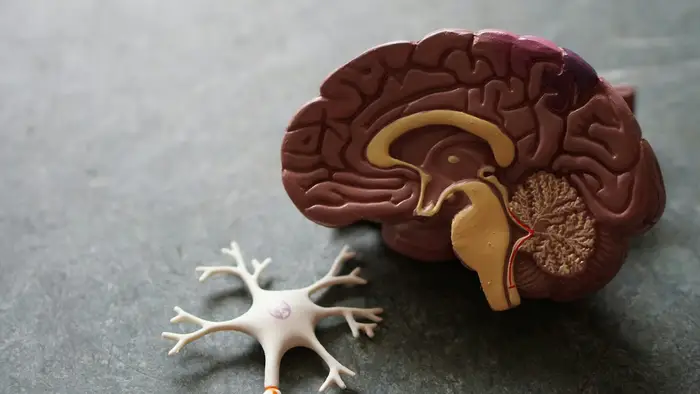
The most direct way to test the claim is beautifully simple: take brains from heavy drinkers and brains from non-drinkers, count the neurons, and compare. That is exactly what Danish researcher Grethe Jensen and her colleagues did in 1993, in what remains the landmark study on this question.
Jensen’s team meticulously counted neurons in matched brain samples from alcoholics and non-alcoholics. If the myth were true — if years of heavy drinking steadily murdered brain cells — the alcoholics’ brains should have shown a clear deficit. They did not. The researchers found no real difference in either the density or the overall number of neurons between the two groups. Lifelong heavy drinkers had, as far as anyone could count, just as many brain cells as everyone else.
That single finding should have ended the debate, but extraordinary claims need extraordinary confirmation, so other teams ran their own counts. A landmark 2005 study published in the journal Neurology examined brain tissue from 39 deceased individuals with histories of alcohol use disorder and compared them against controls. Even among people who had drunk heavily for more than 25 years, the researchers found no statistically significant reduction in neuronal density in the frontal cortex. A quarter-century of heavy drinking, and the neuron count held steady.
Then researchers went further still. A team at Washington University in St. Louis applied alcohol directly to isolated neurons in controlled laboratory conditions — no liver to filter it, no bloodstream to dilute it, just ethanol meeting naked brain cells. The ethanol did not kill the cells. What it did was interfere with the way neurons transmit information, particularly by disrupting communication at the dendritic ends where neurons receive signals from neighboring cells. Even with no defenses in the way, alcohol sabotaged the wiring without destroying the hardware.
This is the consistent pattern across decades of research: count the neurons, and the drinkers have just as many. The myth fails the most direct test science can devise.

What Alcohol Actually Does to the Brain
So if alcohol does not kill brain cells, why do heavy drinkers show shrunken brains and real cognitive problems? Because “not killing cells” and “not harming the brain” are very different statements, and the myth’s greatest harm may be that it obscures the genuine damage.
Here is what the evidence actually shows. First, the dendrite story. Dendrites are the branch-like extensions at the ends of neurons that receive incoming signals — the wiring that lets brain cells talk to each other. In 1990, Harper and Corbett (a follow-up to the study that had seeded the myth) examined the neocortex of 15 deceased men with alcohol use disorder against 15 matched controls. The drinkers had consumed an average of 120 grams of alcohol per day — about 8.6 US standard drinks — while the controls drank less than 20 grams a day, and five drank nothing at all. The neurons were all still there. But the neurons in the drinkers’ brains showed a significant loss of dendrites compared with the controls. The cells survived; their branches withered.
That finding has been confirmed and extended many times. According to Dr. Roberta J. Pentney, a professor of anatomy and cell biology at the University at Buffalo who has studied alcohol’s effects on the brain, alcohol damages dendrites — particularly in the cerebellum, the region responsible for motor coordination and learning. This is why intoxication looks the way it does: the stumbling, the slurred speech, the clumsiness. The cerebellum’s communication lines are fuzzed, not its cells destroyed. Dr. Pentney also stresses two crucial nuances: losing entire brain cells is not necessary to disrupt brain function — damaged wiring disrupts it just fine — and much of this dendritic damage is reversible with abstinence, therapy, and training.
Second, the chemistry. Ethanol enhances the activity of GABA-A receptors, which slow neural firing, while suppressing NMDA glutamate receptors, which are critical for learning and memory encoding. This double action is why a few drinks blur reaction time and impair the formation of new memories — the famous blackout. The brain is not losing cells during a blackout; it is temporarily failing to record.
Third, the structure. Brain imaging of people with alcohol use disorder consistently shows white matter degradation — diffusion tensor imaging reveals reduced fractional anisotropy in the corpus callosum and frontal tracts, which reflects myelin breakdown and slower signal transmission between brain regions. Meta-analyses confirm hippocampal volume reductions of up to around 10 percent in people with alcohol use disorder, linked to impaired memory and spatial navigation. A 2022 longitudinal MRI study published in Nature Communications followed 350 adults over 12 years and found no correlation between moderate drinking and neuronal loss — but the volume reductions seen in heavy drinkers were real, attributable to shrinkage of the neuropil (the dense tangle of dendrites, axons, and synapses) and loss of glial support cells, not to missing neurons.
And the famous antiseptic argument? It collapses on dosage. Yes, pure ethanol kills cells — that is precisely why it works as a disinfectant. But killing cells requires alcohol concentrations close to 100 percent, while intoxication begins at a blood alcohol level of about 0.1 percent. The quantity of alcohol a person could possibly consume without dying simply never introduces enough ethanol into the bloodstream to kill brain cells. Your liver, meanwhile, works constantly to keep it that way, metabolizing roughly 12 ounces of beer, 5 ounces of wine, or 1.5 ounces of spirits per hour. Only when drinking outpaces that processing speed does excess alcohol linger in the blood and reach the brain in force — and even then, it disrupts rather than destroys.
The Genuine Exceptions
Intellectual honesty requires acknowledging where the myth gets closest to the truth, because there are narrow circumstances in which alcohol abuse genuinely does lead to brain cell death.
The most important is Wernicke-Korsakoff syndrome. Severe, long-term heavy drinking can cause a deficiency of thiamine (vitamin B1), and that deficiency can trigger this neurological disorder, which does cause permanent, direct brain cell death in specific brain regions. It is one of the most serious long-term consequences of chronic alcohol abuse — and notably, the killer is the vitamin deficiency, not the ethanol molecules themselves attacking neurons.
The second exception is recovery’s limits. Much of alcohol’s structural damage is reversible: abstinence reverses white matter shrinkage (researchers believe through remyelination — the regrowth of myelin sheaths), and animal studies show that suppressed hippocampal neurogenesis rebounds within weeks of sobriety. But recovery is partial and slow. Hippocampal volume restoration takes months, and higher cognitive functions return more slowly than structural volume. The brain can heal, but it cannot always heal completely, and the longer and heavier the drinking, the less complete the recovery.
These exceptions are real, and they are frightening enough on their own. They just do not support the blanket claim. “Alcohol kills brain cells” as a universal statement about drinking is false; “chronic severe alcohol abuse can, through specific mechanisms, destroy brain tissue” is true. The myth takes the second, narrower truth and inflates it into the first, broader falsehood.
Why the Myth Refuses to Die
If the science has been settled since the 1990s, why does the claim still circulate with such confidence? Several forces keep it alive.
The first is that it feels true. Anyone who has endured a hangover — the headache, the fog, the sense that something has been damaged — finds “I killed brain cells last night” a satisfying explanation. The myth offers a story that matches the sensation. The real explanation (dehydration, disrupted sleep architecture, acetaldehyde toxicity, neurotransmitter rebound) is more complicated and less narratively satisfying.
The second is moral utility. “It kills your brain cells” is an extremely effective thing to tell a teenager, which is why parents, teachers, and public-health campaigns have repeated it for generations. It may even have done some good as a deterrent. But a useful lie is still a lie, and it has a cost: when young people learn the claim is false, the discovery can discredit the legitimate warnings that came packaged with it.
The third is the internet’s memory. As one summary in Scientific American Mind put it, drinking alcohol does not kill brain cells, although it can damage them — yet search engines remain full of confident assertions to the contrary, repeated by sites that never checked the primary research. The “three beers kill ten thousand brain cells” factoid is a perfect piece of viral content: specific enough to sound researched, scary enough to share, and wrong enough that no researcher will ever confirm it.
And the fourth is a grain of truth at the center. Heavy drinkers really do suffer brain shrinkage and cognitive decline. When people see those real harms, the myth offers itself as the explanation, and few bother to check whether the mechanism is cell death or something else. The myth survives because the damage it misdescribes is genuine.
There is also a fifth force, quieter but powerful: nobody has much incentive to correct it. Public-health communicators know the claim is inaccurate, yet many tolerate it because it points in the right direction — it discourages heavy drinking, which is genuinely harmful. Scientists, for their part, rarely build careers out of debunking folk sayings, so corrections appear in journals and specialist publications while the myth enjoys the vastly larger audience of social media, school assemblies, and dinner-party wisdom. The result is an asymmetry of reach: the debunking is technically published, but the myth is culturally broadcast. Until accurate explanations of dendritic damage and myelin loss become as repeatable as “it kills your brain cells,” the simpler falsehood will keep winning the popularity contest.

The Verdict
False. The claim that drinking alcohol kills brain cells is a myth.
The evidence against it is direct and convergent. Grethe Jensen’s 1993 neuron census found no difference in neuron density or number between alcoholics and non-alcoholics. A 2005 Neurology study of 39 people with alcohol use disorder found no significant neuronal loss in the frontal cortex even after 25-plus years of heavy drinking. Washington University researchers applied ethanol directly to isolated neurons and watched it disrupt communication without killing a single cell. A 2022 longitudinal MRI study of 350 adults found no link between moderate drinking and neuronal loss.
What alcohol actually does is damage the connections — dendrites wither, myelin degrades, neurotransmitter systems are disrupted, and brain regions shrink from the retraction of wiring rather than the death of cells. That damage is real, serious, and in the case of Wernicke-Korsakoff syndrome can involve genuine cell death via thiamine deficiency. Heavy drinking is unambiguously bad for the brain. It just does not work the way the slogan says.
The distinction is not academic hair-splitting. It matters because the myth teaches the wrong lesson: that the damage is a simple body count, already done, irreversible from the first drink. The truth is both more reassuring and more demanding — more reassuring because much of the damage can reverse with sustained abstinence, and more demanding because the real harms (shrunken wiring, impaired memory, degraded white matter) accumulate silently while the myth has you watching for a massacre that never comes.
So the next time someone warns you that every drink kills brain cells, you can tell them the neurons survived the count. Then tell them what the studies actually found — because the truth about alcohol and the brain is alarming enough without the fiction.