No, Cold Water After a Meal Does Not Cause Cancer
Read this, and send it to ten friends. It could save a life.
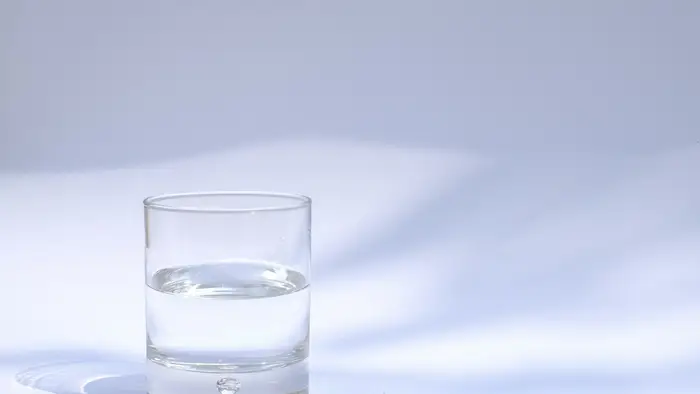
That is the closing line of one of the longest-lived chain messages in internet history — a WhatsApp forward that has been arriving in family group chats, church mailing lists, and office inboxes for well over a decade. Its claim is vivid, mechanical, and terrifyingly specific: drinking cold water after a meal “solidifies” the oily food you just ate, turning it into a sludge that lines your intestines, turns to fat deposits, and eventually causes cancer. The prescribed solution is equally specific: after a meal, it is “best to drink hot soup or warm water.”
If you have ever read it and paused before taking a sip of iced water with dinner, you are far from alone. The message has been circulating in one form or another since at least the mid-2010s, and in January 2026 a Malaysian blog noted it was still making the rounds as a fresh scare. So here is the straightforward question: does any of this hold up? We traced the claim from the family group chat back through the fact-checkers, the oncologists, and the physiology of what actually happens in your stomach. The verdict is not complicated — but the story of how the claim survived this long is worth telling, because it is a textbook example of how health misinformation is built to last.
The Viral Claim
Let us start with the text itself, because the wording is the weapon. The version still circulating in 2026 reads roughly like this: “Cold water will solidify the oily stuff that you have just consumed. It will slow down the digestion. Once this ‘sludge’ reacts with the acid, it will break down and be absorbed by the intestine faster than the solid food. It will line the intestine. Very soon, this will turn into fats and lead to cancer. It is best to drink hot soup or warm water after a meal.”
The message then pivots, without warning, into a second, unrelated scare — the heart-attack symptoms block. “Common Symptoms Of Heart Attack… You should know that not every heart attack symptom is going to be the left arm hurting. Be aware of intense pain in the jaw line. You may never have the first chest pain during the course of a heart attack. Nausea and intense sweating are also common symptoms. 60% of people who have a heart attack while they are asleep do not wake up.” Then the emotional closer, attributed to an unnamed cardiologist: “if everyone who reads this post shares it to 10 people, you can be sure that we’ll save at least one life.”
Notice how the two halves work together. The first half manufactures a threat — your last meal might be congealing into cancer inside you right now — and offers a cure. The second half manufactures guilt and urgency — if you do not forward this, someone might die, and it will be your fault. Neither half cites a single source, study, institution, or named doctor. As a Malaysian debunking of the message put it, the text “contains no external references to back up its far-fetched claims.” That absence is not an oversight. A forward that named a real study could be checked; a forward that names nobody can be argued with by nobody.
That is the first red flag, and it is the same red flag fact-checkers have been raising for years. When VishvasNews investigated a resurgence of this exact post in 2019 — the post had been shared on Facebook by a page called “Health Tips By Raghida” with just 193 followers — the investigators started with the obvious step: they searched the official website of the U.S. National Cancer Institute for any report connecting cold water and cancer. They found nothing. “If the information was true,” they wrote, “it would have been well documented in medical establishments.”
Anatomy of a Decade-Old Chain Letter
The cold-water scare is not new, and its age is itself evidence against it. The Cancer FactFinder project, which reviewed the claim in an entry updated in March 2026, dates its circulation to “over a decade ago,” when it spread across social media as the idea that cold water “solidifies fats in the stomach, creating a ‘sludge’ that lines the intestines, eventually turning into fat deposits and causing cancer.” A claim that has been repeated for more than ten years without a single study, case series, or health authority endorsing it is a claim that has had every opportunity to be confirmed and has never been confirmed once.
Think about what would have to be true for the claim to survive unnoticed. Drinking cold water — iced water, cold soda, milkshakes, iced tea — with or right after meals is one of the most common behaviors in human history. Billions of people do it daily across every continent. If cold beverages after meals caused intestinal sludge that led to cancer, the signal would be enormous and impossible to miss: a cancer epidemic tracking exactly with cold-drink consumption. No such pattern exists anywhere in the global cancer statistics. As one debunking noted, “It is a very common practice to consume cold water or other cold beverages at mealtime. Therefore any connections between cold water and cancer would have long since been extensively studied and reported.” A mass habit that caused cancer could not hide from epidemiology for a decade; it could not hide for a year.
The heart-attack half of the message is equally ancient and equally suspect. The “60% of people who have a heart attack while they are asleep do not wake up” line and the “share this with 10 people” plea are stock parts of a genre — the anonymous medical chain letter — that predates WhatsApp and stretches back to the fax era. These messages always quote a “cardiologist” with no name, no hospital, and no date. The technique is called authority laundering: borrow the white coat, skip the person inside it, and let the reader fill in the credibility themselves.
And the instinct behind it all — the worry that drinking with meals is somehow dangerous — is far older than the internet. One debunking quoted an entry from a book of common misconceptions published in 1923, documenting the belief, popular at the Cape a generation before that, “that it is Bad to Drink Water Directly after Eating Fruit.” The author had asked a Wimpole Street physician about it and could find no truth in it beyond a vague concern about diluting gastric juices. The cold-water-cancer message is the same folk anxiety, dressed up with a mechanism (“sludge”) and a modern disease (cancer), and fired off into the age of forwarding.
What Actually Happens When Cold Water Meets a Full Stomach
Now the physiology, which is where the claim dies properly. The chain message’s theory requires three things to be true: first, that cold water stays cold inside you long enough to congeal fats; second, that the resulting “sludge” survives the stomach intact and coats the intestines; third, that this coating somehow causes cancer. Every step fails.
Step one fails on temperature. Your stomach is a living furnace, held near 37°C and packed with warm tissue and blood flow. The U.S. National Institutes of Health has noted that chilled liquids do not solidify ingested fats when the two meet in the stomach — and the cold water itself is quickly brought up to the body’s internal temperature. Research using scintigraphy — a nuclear-imaging technique that tracks stomach contents in real time — shows that the temperature inside the stomach returns to near body level within 20 to 30 minutes of drinking something cold. The cold drink is warmed by the surrounding tissue long before it could act as a congealing agent, and this is true whether the water is cold or room temperature.
Step two fails on chemistry. Dr. Manish Singhal, an oncologist at Indraprastha Apollo Hospital, told the VishvasNews fact-checkers: “There is no link between cold water and cancer. The cold water you consume after food will eventually turn to the body’s internal temperature.” He described the standard picture of digestion: the stomach muscles mix food and liquid with digestive juices, and the stomach slowly empties its contents into the small intestine. Digestion is not a passive conveyor belt on which “sludge” can slide through untouched. It is an active churning process — the stomach grinds, mixes, and chemically dissolves its contents with hydrochloric acid and digestive enzymes before anything is allowed to pass onward. By the time food reaches the intestine, it has been reduced to a semi-liquid pulp called chyme regardless of what temperature the water beside it was.
The third step fails on logic. The message never explains, even in its own terms, how a layer of intestinal fat would become cancer. Cancer is uncontrolled cell growth driven by genetic damage. A coating of fat in the intestine is not genetic damage, and the message offers no pathway from one to the other — no inflammation, no mutation, no mechanism of any kind. It simply asserts that “this will turn into fats and lead to cancer,” as if the words “lead to” did the scientific work.
Dr. Patricia Rich, a medical oncologist and the Medical Oncology Director at the Cancer Treatment Center of America Lung Cancer Institute, addressed the rumor directly for The Healthy: “The fear was that drinking cold water will solidify fat which will then accumulate in the intestines and lead to cancer, but this is not proven or plausible. The acidity in the stomach is high, so everything is broken down.” Short, precise, and definitive: not proven, not plausible.
The Missing Evidence
Here is the most damning fact in this story: nobody has ever produced any evidence for the claim, and researchers have barely bothered to look — because from a scientific standpoint, there is nothing to study. The Cancer FactFinder entry is remarkably blunt about this. Its evidence status reads: “Not evaluated: There is currently no scientific research available to assess this claim. (Often because researchers don’t think it’s worth studying).” The epidemiological section is one sentence: “No epidemiological studies have linked cold water consumption to a higher risk of cancer.” The conclusion: “There is no scientific evidence behind this claim. Drinking cold water does not harm digestion or increase cancer risk.”
This is the tell-tale signature of a pure internet myth, as opposed to a contested scientific question. Real health controversies — the kind where honest scientists disagree — come with studies on both sides, conferences, dueling meta-analyses. This claim has none of that. It has a Facebook page with 193 followers, an anonymous forwarded paragraph, and a decade of silence from every oncology institution on Earth. The National Cancer Institute does not list cold water as a cancer risk factor. The American Cancer Society does not list it either. Multiple recent reviews of digestion have found that water temperature makes no meaningful difference to digestion speed or food breakdown in healthy people. The absence of evidence here is not a gap waiting to be filled; it is the result of the claim being so disconnected from known biology that no researcher has found a testable hypothesis worth grant money.
It is worth pausing on what real cancer risk factors look like, because the contrast is instructive. When a genuine environmental cause of cancer is identified, it comes with specifics: named institutions, large population studies, measurable dose-response relationships, biological mechanisms. The cold-water claim has none of these properties. It has vibes — the vivid image of sludge, the intimacy of a family chat, the moral pressure of a “could save a life” sign-off. Vibes are not evidence, and they have never, in the history of medicine, turned out to be the leading indicator of a real carcinogen.
Why It Feels True: The Sludge in Your Kitchen
If the science is so one-sided, why does the claim keep working? Because it hijacks a real observation. Anyone who has cooked knows that hot cooking oil poured onto a cold surface congeals. Leave bacon grease in a cold pan and it turns white and solid. Your body, the message implies, is just another surface. The analogy is intuitive — and it is completely wrong, because your stomach is not a cold pan.
The analogy smuggles in a false picture of the stomach: a cool, still container where food sits undisturbed, like leftovers on a countertop. The real stomach is nothing like that. It is a muscular, churning, acid-filled organ operating at a regulated 37°C, continuously supplied with warmth from the blood vessels around it. Pouring ice water into it is less like putting oil on a cold counter and more like dropping an ice cube into a pot of simmering soup — the cube melts, the soup stays hot, and the meal continues as before. This is why the NIH’s point matters: “chilled liquids do not solidify ingested fats when the two meet in the stomach.” The meeting happens in a 37-degree acid bath, not a refrigerator.
The claim also exploits a genuine principle — that temperature affects chemistry — while getting the direction backwards. Heat speeds up chemical reactions; cold slows them. That part is true, and it is exactly why the idea sounds smart. But the body is a regulated-temperature machine that warms cold inputs within minutes. The slowing effect the message imagines never gets the time it would need to matter.
And there is one more reason the scare persists: it rides on a real, documented temperature risk, only on the wrong end of the thermometer. In 2016, the World Health Organization’s International Agency for Research on Cancer reviewed the evidence on beverage temperature and concluded that drinking very hot beverages — consumed above about 65°C (149°F) — is “probably carcinogenic to humans,” classified as Group 2A. The mechanism is repeated thermal injury to the esophagus: scalding damages the lining, chronic damage drives chronic inflammation and extra cell turnover, and more cell division over many years raises the chance of DNA errors that can lead to cancer. Multiple large observational studies, including the Chinese Kadoorie Biobank cohort and the Iranian Golestan cohort, have found associations between very hot tea and mate drinking and esophageal squamous cell carcinoma.
Read that carefully, because it is the exact opposite of the chain message’s advice. The genuine, evidence-backed temperature risk runs from scalding heat to the esophagus — not from cold water to the intestines. The message tells people to avoid cold drinks after meals and favor hot ones; the real science says the temperature worth being careful about is the one hot enough to burn your mouth. If you habitually drink tea or soup so hot it scalds, let it cool — that is the one temperature-related change with actual evidence behind it. Switching from cold water to warm water after a meal buys you nothing and warns you about nothing real.
The Company This Claim Keeps
The cold-water scare belongs to a whole family of temperature-and-cancer rumors that circulate on the same circuits. The Healthy’s roundup of “things you think cause cancer but don’t” groups cold water with rumors about microwaving, plastic bottles, antiperspirant, and power lines — all vivid, all specific, all evidence-free. This clustering is not a coincidence. Health misinformation has a recognizable aesthetic: it names a familiar everyday object, attaches it to a dreaded disease, supplies a pseudo-mechanical explanation that sounds scientific, and closes with a call to action. “Cold water solidifies fat into cancer sludge; drink hot water instead” is structurally identical to “microwaving plastic releases carcinogens; use glass instead.” The formula is the product.
Spotting the formula is a skill, and this article is a training exercise in it. When the next forward arrives — and it will — run through the checklist this story teaches. First, is anyone named? Real medical warnings name hospitals, journals, and dates; this one names nobody. Second, does the message demand forwarding? Real public-health guidance asks you to talk to your doctor; chain letters ask you to talk to your contacts. Third, does the mechanism survive five seconds of contact with basic biology? The “sludge” theory collapses the moment you remember that your stomach is a warm, acidic, churning organ, not a cold pan. Fourth, what do the big institutions say? Silence from every oncology authority on the planet, sustained for over a decade, is itself an answer.
There is a final, subtler point about why claims like this one deserve firm debunking rather than a shrug. Harmless-sounding dietary myths are not always harmless. A person who believes cold water causes cancer may switch to hot water after meals — which, per the actual evidence, is the wrong direction to move in if the drinks are scalding. More broadly, every piece of medical misinformation that survives makes the next one easier to believe, because it trains people to treat forwarded paragraphs as medical literature and named oncologists as optional. The cost of one false claim is not one false belief; it is a small erosion of the habit of checking.
The Verdict
Verdict: False.
Drinking cold water after a meal does not cause cancer. The chain message’s entire mechanism — cold water solidifying food into an intestinal “sludge” that becomes fat deposits that become cancer — is not proven, and it is not plausible. Cold water is warmed to body temperature within minutes; the stomach’s acid and churning break down fats regardless of water temperature; no epidemiological study has ever linked cold water consumption to cancer risk; and no major cancer institution — the National Cancer Institute, the American Cancer Society, the WHO’s cancer research agency — lists cold water as a risk factor or mentions any connection at all. The claim has circulated for over a decade without a single study, case, or authority behind it.
The one real temperature-and-cancer finding runs in the opposite direction: very hot beverages, above about 65°C, are classified by the IARC as probably carcinogenic because of repeated thermal injury to the esophagus. So if you want one temperature habit supported by evidence, it is this: let scalding drinks cool down. Keep drinking your cold water with dinner. Your stomach knows what to do with it.
Sources: Cancer FactFinder, “CLAIM: Drinking cold water causes cancer” (updated March 1, 2026), via cancerfactfinder.org; VishvasNews, “Quick Fact Check: Fake Post Claiming That Drinking Cold Water After Meals Causes Cancer Resurfaces” (2019), quoting Dr. Manish Singhal, oncologist, Indraprastha Apollo Hospital; The Healthy, “Things You Think Cause Cancer but Don’t,” quoting Dr. Patricia Rich, MD, Medical Oncology Director, Cancer Treatment Center of America Lung Cancer Institute; Webefit, “Cold vs. Warm Water for Health,” on intragastric temperature normalization and the absence of peer-reviewed evidence for the “sludge” theory; IARC Monographs Volume 116, “Drinking coffee, mate, and very hot beverages,” Lancet Oncology (2016), classifying very hot beverages above 65°C as probably carcinogenic (Group 2A); oze.my, “Drinking Cold Water After A Meal Is Bad For Your Health” (reproducing the chain message and noting the absence of sources and NCI references).